The Diplomat: Rufus Sewell Explains Hal Wyler’s Breaking Point in Season 4: “He Pushes It to the Nth Degree”
Rufus Sewell has offered a revealing look into Hal Wyler’s most consequential decision yet in The Diplomat Season 4 finale, explaining why the ambitious vice president finally walks away from the very seat of power he has spent years trying to reach. According to the actor, Hal’s departure is not simply a declaration of loyalty to his wife, Kate Wyler. It is the culmination of a long struggle to balance political ambition, personal principles and his determination to influence decisions that could have catastrophic consequences.
Throughout the Netflix political drama, Hal has remained one of its most difficult characters to define. Played by Sewell, he has evolved from a seasoned diplomat and the husband of U.S. ambassador Kate Wyler, portrayed by Keri Russell, into vice president under President Grace Penn, played by Allison Janney. His rise has transformed both his relationship with Kate and his understanding of the power he has spent much of his career pursuing.
Created by Debora Cahn, The Diplomat uses the Wylers’ complicated marriage to explore the tensions that shape political partnerships, particularly the fragile relationship between the United States and the United Kingdom. Hal and Kate may share many of the same ambitions, but their increasingly different positions within the administration have forced them to confront difficult questions about compromise, loyalty and the cost of remaining close to power.
For Sewell, however, Hal’s apparent willingness to manipulate situations for his own advantage does not tell the whole story.
“He is very easy to judge,” the actor explained, particularly when viewers assess Hal before understanding all the circumstances surrounding his decisions. Sewell maintains that his character generally has a compelling reason for the choices he makes, even when those choices appear selfish or calculating.
He also believes Hal’s ambition extends far beyond his own advancement.
“Hal has an enormous ambition for his wife and for the things that they always said they wanted to do together in the world,” Sewell said, arguing that this shared vision distinguishes Hal from someone motivated purely by ego.
Season 4, however, forces Hal to confront the limits of that philosophy. As Grace becomes increasingly willing to take dangerous political risks, his determination to remain close enough to influence her decisions begins to threaten the very principles he has spent years trying to preserve.
Warning: Spoilers ahead for the Season 4 finale of The Diplomat, titled “Warships.”
Hal Wyler’s ambition has always been tied to Kate’s future
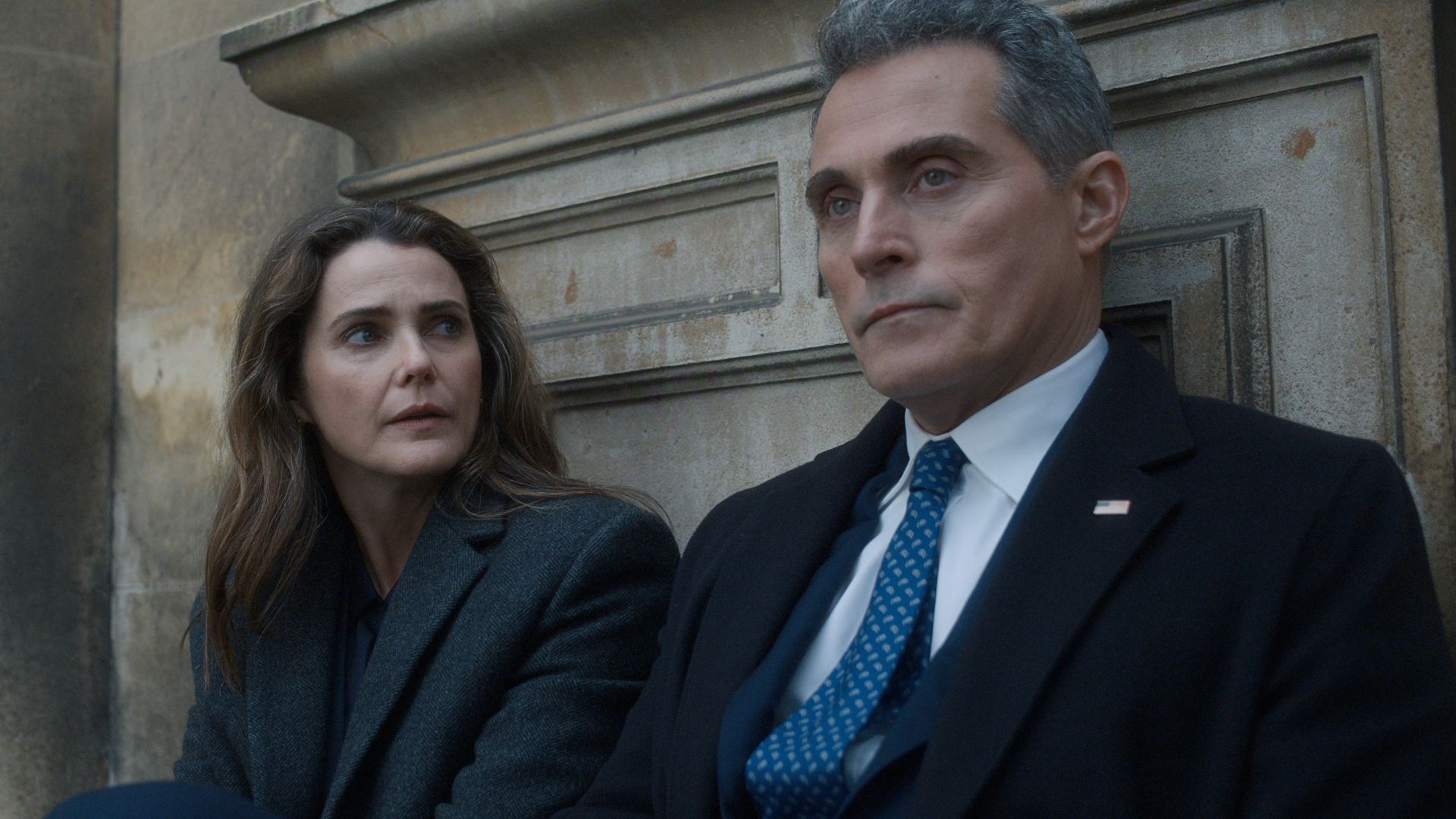
Hal’s complicated relationship with power did not begin when he became vice president. According to Sewell, the foundations of his character and his marriage to Kate were established from the earliest scripts of Season 1.
Before filming began, the actor received background information from Cahn about how Kate and Hal first met, how their professional positions had changed over the years and what experiences had contributed to the difficulties in their marriage.
Those details helped Sewell develop an understanding of Hal long before the audience discovered the full extent of their shared history.
As the series has progressed, viewers have gradually learned that some of Hal’s most questionable behavior stems from a desire to advance the ambitions he and Kate once pursued together. His methods may be manipulative, but his underlying motivation is more complicated than simple self-interest.
Sewell is not convinced that Hal has fundamentally changed since entering the White House. Instead, he believes the demands of his new position have brought certain aspects of his personality to the surface.
Interestingly, Kate has also begun to recognize that some of the traits she once criticized in her husband may have been shaped by the pressures of his job. As she encounters similar challenges herself, she discovers that decisions she previously blamed on Hal’s character can also emerge from the responsibilities and compromises of political life.
That realization creates a more complicated picture of their marriage. Neither spouse can easily claim the moral high ground, and both must confront the possibility that their professional instincts have contributed to their personal difficulties.
For Sewell, that uncertainty is central to the show’s appeal. It is often impossible to separate Hal’s desire to protect Kate’s interests from his own ambitions because, for much of their relationship, the two have been inseparable.
“He has been seriously gunning and plotting for his wife’s advancement since the beginning of Season 1,” Sewell explained.
He acknowledges that Hal can be tricky and manipulative, but argues that these qualities have frequently been directed toward what Hal believes will benefit Kate.
The problem emerges when the opportunity he has been working toward suddenly becomes available to him instead.
When Grace chose Hal over Kate for the vice presidency at the beginning of Season 3, the decision once again disrupted the balance of power within their marriage. Hal accepted the opportunity, but Sewell points out that his first concern was what the appointment would mean for his wife.
That concern was genuine, the actor insists. Hal wanted Kate beside him, not simply watching from the sidelines.
By Season 4, however, something has begun to change. Hal is growing accustomed to the influence his position affords him. For the first time, he appears to enjoy having direct access to power and being intellectually challenged by someone other than Kate.
That satisfaction complicates an already difficult stage of their relationship. The more comfortable Hal becomes in his new role, the harder it may be for him to recognize when his pursuit of influence is costing him something more important.
Why Hal continues to stand beside Grace Penn
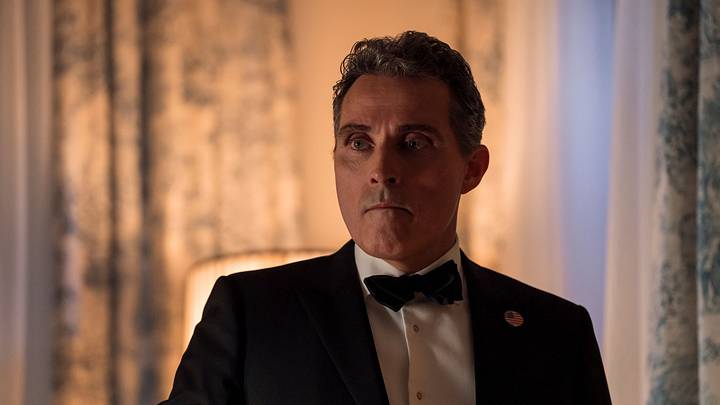
Grace’s presidency presents Hal with a different kind of challenge.
Following the assassination attempt against her, her decisions become increasingly dangerous, raising concerns among Kate and other members of the administration. Hal recognizes the same warning signs, Sewell says, but believes he must remain close to the president if he hopes to influence her behavior.
The actor describes Hal as someone who is constantly observing, calculating and looking for opportunities to steer events away from disaster. Even when he recognizes that Grace is moving in a dangerous direction, he does not always challenge her openly.
That restraint can make him appear weak.
At moments when viewers might expect Hal to speak out, he instead continues following Grace and attempting to preserve his access to the president. Sewell admits that this was one of the more difficult aspects of the character to portray because Hal’s silence can be frustrating, even when his intentions are understandable.
He believes Hal experiences small humiliations along the way, but accepts them because he remains convinced that staying close to Grace gives him the best chance of making a difference.
Sewell compares this approach to the relationship between Tony Blair and George W. Bush around the time of the Iraq War. In his interpretation, remaining beside a powerful leader in the hope of moderating their decisions can prove ineffective, particularly when that realization comes too late.
Hal’s problem is not that he fails to see what Grace is doing. Rather, he struggles to accept that his continued presence may no longer be enough to change the outcome.
His determination to retain influence becomes both his greatest political asset and his most dangerous weakness.
Does Hal secretly want to become president?

Season 4 also raises questions about whether Hal has begun thinking seriously about the presidency itself.
When Grace is nearly assassinated, Hal temporarily assumes presidential powers. Kate recognizes that he handles the responsibility well and appears to have considered what kind of president he would want to be if he ever reached the position permanently.
Sewell agrees that Hal has thought about the possibility, but emphasizes that his ambitions operate on a much longer timeline.
Hal has previously rejected Grace’s suspicions that he might be trying to engineer her removal so he could replace her. As Sewell explains, Hal believes that taking the presidency through a damaging political incident would undermine his own ambitions.
If he ultimately wants the highest office, he would prefer to reach it much later and under circumstances that do not leave his reputation permanently compromised.
His temporary assumption of presidential authority therefore does not become an opportunity for personal celebration. Instead, Hal focuses on ensuring that Grace can resume control as smoothly as possible.
He handles the responsibility effectively without allowing it to go to his head, Sewell says. There is no immediate indication that Hal wants to remain in charge.
Yet the experience may still reveal something important about him. His ability to perform the job could reinforce his belief that he is capable of wielding greater authority in the future.
For now, however, Sewell sees Hal as someone playing the long game.
His relationship with Grace is also more respectful than a simple rivalry between two ambitious politicians. Hal recognizes her formidable abilities and genuinely admires her. He is not merely waiting for her to make a mistake so he can exploit it.
In Sewell’s view, Hal understands that Grace is a formidable political operator in her own right. He respects her because he recognizes the same strategic instincts in her that he sees in himself.
That respect makes his eventual decision to walk away from her administration all the more significant.
The Season 4 finale pushes Hal beyond his breaking point

The fourth season places Hal in an increasingly difficult position as the crisis surrounding the missing Russian submarine escalates.
The conflict stems from the Season 3 revelation that Hal and Grace secretly seized the Poseidon nuclear weapon from a Russian submarine without Kate’s knowledge. The consequences of that operation continue to threaten international stability and deepen the divisions within the administration.
Meanwhile, Kate has helped force British Prime Minister Nicol Trowbridge, played by Rory Kinnear, to resign by using a recording of him attacking his now-deceased former adviser. His successor, Bethan Vaughn, portrayed by Jodie Whittaker, soon becomes an adversary.
The situation deteriorates further when Vaughn grants Russian forces safe passage to retrieve the missing submarine.
Grace responds by bypassing her advisers and deploying warships. She vows to fire on any country, including America’s allies, that attempts to prevent her from keeping Russian vessels out of British waters.
Her decision brings the administration to a dangerous crossroads.
At the G7 Summit, Kate concludes that she can no longer serve in good conscience under Grace. She publicly resigns as U.S. ambassador, delivering a dramatic challenge to the administration in front of the assembled diplomats.
Her departure is followed by three other senior American officials: White House Chief of Staff Billie Appiah, played by Nana Mensah; Secretary of State Miguel Ganon, portrayed by Miguel Sandoval; and, eventually, Hal himself.
For Sewell, the finale provided a clear turning point in his understanding of the character’s journey.
When he first read the final episode, he felt relieved because he could finally see the direction Hal’s decisions had been taking him. The story allowed him to portray a man who comes dangerously close to compromising his principles before realizing that he has gone too far.
Throughout the episode, Hal remains locked in an internal struggle. He wants to preserve his access to Grace so he can intervene at the last possible moment and prevent her from making a catastrophic mistake.
His earlier efforts to restrain the president are repeatedly rejected. Nevertheless, Hal’s instincts tell him that directly confronting someone like Grace could cost him the influence he needs.
For most of the season, he continues to believe that remaining in the room is more valuable than walking away from it.
Then Kate stands up and resigns.
As other officials follow her, Hal finally recognizes that the situation has reached a point where staying would mean accepting a decision he can no longer defend.
“He pushes it to the nth degree,” Sewell said of Hal’s approach to maintaining his influence.
The actor explains that Hal reaches his breaking point only when Kate’s departure makes the choice unavoidable. In that moment, he acts almost instinctively and follows her out of the summit.
Sewell was particularly pleased with the unexpected turn because it brings Hal’s internal conflict to a natural conclusion without resolving every question surrounding his future.
The decision is explosive, he says, and its consequences will be enormous. By deliberately leaving the room he once believed he needed to occupy, Hal gives up the access he has spent years pursuing.
He does so because, at last, the cost of remaining has become too great.
Hal’s resignation is not necessarily a choice between Kate and his career
Although Hal leaves the summit alongside Kate, Sewell cautions against interpreting the moment as a straightforward declaration that he has chosen his marriage over his political ambitions.
The actor agrees with Cahn’s interpretation that Hal is ultimately choosing what he believes is right rather than simply choosing his wife.
For Sewell, the distinction matters.
If Hal had fundamentally disagreed with Kate’s decision to resign, he would not have followed her. Their exchange of looks before he leaves suggests that they understand what the other is doing, even if the full meaning of that understanding remains uncertain.
Their decision may create an opportunity for them to rebuild their relationship, but it does not guarantee a conventional reconciliation.
Sewell believes the finale leaves room for a more mature arrangement in which the couple can decide how they want to move forward, whether together or apart.
He also warns that viewers should not assume the decision means they have definitively chosen to preserve their marriage.
The relationship has always been compelling because of its contradictions. Kate and Hal can be united, estranged or caught in the middle of a crisis, yet the dynamic between them remains central to the drama.
Sewell is equally open to the possibility that their personal lives could develop in unexpected directions, including new relationships.
He has no inside knowledge of what Cahn might write next, or even whether another season will happen. But he trusts that the writer will continue finding interesting ways to challenge the characters and their relationships.
For now, Hal’s departure leaves one major question unanswered: what happens when a man who has spent years pursuing influence discovers that doing the right thing may require surrendering it?
Rufus Sewell reveals how Debora Cahn kept the finale secret
The dramatic ending was also a surprise for Sewell himself.
Although Cahn had a clear idea of how she wanted Season 4 to conclude, she did not tell the actor in advance that Hal would resign alongside Kate.
Production typically begins with the first two episodes, with additional scripts arriving as filming progresses. Cahn gives Sewell information when Hal needs to know something to understand his actions, but that does not mean the actor is expected to reveal that knowledge through his performance.
According to Sewell, Hal often knows far more than he lets on. Maintaining that distinction between what the character understands and what he reveals is an important part of portraying him.
The cast gradually received clues about the direction of the season, but nothing fully prepared them for the final twist.
Cahn also keeps major revelations tightly controlled during production. When an episode contains a significant surprise, actors who are not involved in the relevant scenes may receive scripts with portions blacked out.
The finale followed that approach. The cast could read Kate’s final decision to stand up and resign, but the remainder of the ending was concealed.
That meant the actors experienced the revelation much as the audience would when the finished episode aired.
Sewell recalls the excitement of watching Ato Essandoh, who plays Stuart Hayford, react alongside Ali Ahn, who portrays Eidra Park, and Nana Mensah as they encountered the surprise for the first time.
Their reactions gave him a sense of how effectively the ending worked.
For the actor, the secrecy is part of the pleasure of working on the series. Even those responsible for bringing the characters to life are not always told where the story is heading, allowing Cahn to preserve the uncertainty that makes the drama so compelling.
Why Kate and Hal’s marriage feels so real
Beyond the political intrigue, Sewell believes much of The Diplomat’s success comes from the natural chemistry he shares with Russell.
He says their working relationship felt right from the beginning. Rather than trying to analyze every aspect of their connection, the two actors found a rhythm that allowed them to approach the material together.
Their collaboration combines a sense of lightness and playfulness with a willingness to engage seriously with difficult subject matter. Even when the scenes become emotionally intense, they aim to keep the performances alive and responsive.
Sewell also believes they share a commitment to portraying the characters’ imperfections rather than making either spouse consistently right or morally superior.
Real people make mistakes, misjudge situations and occasionally become too confident in their own decisions. The same is true of Kate and Hal.
The actor says he is particularly interested in the moments when a character gets something wrong, becomes smug or makes an avoidable mistake. Those failures make the characters more recognizable because they reflect the contradictions that exist in ordinary human relationships.
For Sewell, the marriage works precisely because neither partner is presented as a perfect counterpart to the other.
Their arguments and disagreements emerge from recognizable flaws, competing ambitions and an underlying familiarity that allows them to understand each other even when they are at odds.
That complexity also explains why Hal’s decision to follow Kate out of the summit carries so much weight. The moment is not simply about a husband supporting his wife. It reflects years of shared history, professional rivalry and difficult compromises that have brought them to a crossroads.
Could Hal’s final speech reveal what happens next?
One final detail from the interview may prove particularly intriguing for viewers hoping to see the story continue.
Cahn had reportedly known how she wanted the season to end, including the final shot of Kate looking directly ahead at Hal. But Sewell revealed that he was also given an actual speech to deliver when Hal addresses the press.
The interviewer suggested that, because The Diplomat rarely uses time jumps, the speech could potentially appear in a fifth season.
Sewell offered no confirmation, responding only with a knowing smile and declining to reveal what the speech contains.
Whether those words eventually appear on screen remains uncertain. The series has not been confirmed to continue in the material discussed in the interview, and Sewell made clear that he does not know what, if anything, comes next.
Nevertheless, the existence of the speech raises an intriguing possibility. Hal’s resignation may be only the beginning of the consequences he and Kate will face after abandoning the administration in such a public manner.
His departure from the summit closes one chapter of his political career, but it leaves his future, his marriage and his relationship with power unresolved.
After spending four seasons trying to influence events from inside the room, Hal has finally walked out. Whether that decision marks the beginning of a new direction or creates an entirely different set of problems remains to be seen.
The Diplomat Season 4 is now streaming on Netflix.