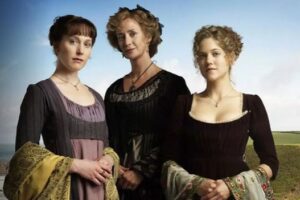
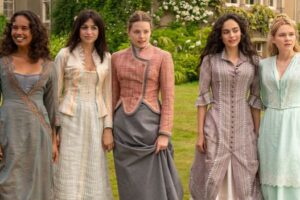
The Buccaneers (1995) Review: A Captivating Period Drama of American Heiresses, British Aristocracy and Forbidden Love
Few period dramas capture the tensions between wealth, social ambition and personal freedom as compellingly as the 1995 BBC miniseries The Buccaneers. Based on Edith Wharton’s final, unfinished novel, the five-part adaptation follows four wealthy American young women as they enter Britain’s aristocratic society in the 1870s, hoping to secure prestigious marriages. But beneath the elegant gowns, lavish country estates and romantic entanglements lies a much more complicated story about class divisions, unhappy marriages, female independence and the gradual decline of the British aristocracy.
Despite receiving a mixed response from television critics when it first appeared, The Buccaneers has remained a personal favorite for viewers who appreciate richly produced historical dramas. With an impressive ensemble led by Carla Gugino, Mira Sorvino, Alison Elliott and Rya Kihlstedt, the miniseries brings Wharton’s unfinished story to life with memorable performances, beautiful locations and a thoughtful examination of the cultural differences between America and Britain.
What makes this adaptation particularly interesting is not simply its romantic storyline, but the way it explores the price women must pay for social acceptance and the compromises wealthy families make when money becomes more important than tradition.
An Unusual BBC Adaptation of Edith Wharton’s Final Novel

The origins of The Buccaneers make it an unusual entry in British television history. Unlike the many BBC productions based on British literary classics, this five-part miniseries takes its material from an American author: Edith Wharton.
Wharton, best known for The Age of Innocence, died at the age of 75 before completing The Buccaneers. Her unfinished manuscript was eventually completed 56 years later by Wharton scholar Marion Mainwaring and published by Viking.
Around the same period, the BBC commissioned screenwriter Maggie Wadey to adapt the story for television. Because Mainwaring and Wadey approached the unfinished material separately, the published novel and television adaptation ultimately featured slightly different endings.
Another notable decision involved the casting. Rather than relying primarily on British actresses to portray the four American heiresses, the BBC brought together four American performers: Carla Gugino, Mira Sorvino, Alison Elliott and Rya Kihlstedt. Their casting helped give the central group a distinctive identity as outsiders entering an unfamiliar aristocratic world.
The result was a five-part historical drama that combined American social ambition with the traditions and contradictions of Britain’s upper classes.
Four American Heiresses Enter Britain’s Marriage Market

The story begins in Newport, Rhode Island, in 1873, where four young women from wealthy American families are struggling to establish themselves in New York society.
They are Virginia “Ginny” St. George, her younger sister Annabel “Nan” St. George, Brazilian-born Conchita “Connie” Closson and Elizabeth “Lizzy” Elmsworth.
While Conchita has already attracted the attention of Lord Richard Marabel (Ronan Vibert), the charming but irresponsible younger son of the Marquess of Brightlingsea, the other three women find themselves facing a less straightforward path into the established social circles of old New York.
An ill-judged prank involving Ginny and Lizzy eventually creates further difficulties. Their governess, Laura Testvalley (Cheri Lunghi), sees an opportunity to change their circumstances. She suggests to Mrs. St. George that Ginny and Nan should experience a London social season, arguing that acceptance by Britain’s upper classes could help secure their position among New York’s wealthiest families.
Through their friendship with Conchita, the sisters gain access to Lord Richard’s family, the financially struggling Brightlingseas. They are also introduced to the equally impoverished Sir Helmsley Thwaite and his son, Guy.
The young Americans arrive in Britain expecting a season of fashionable entertainment and romantic possibilities. They soon discover, however, that the marriage market operates according to its own complicated rules.
Lizzy eventually joins them, determined to pursue her own opportunities in British society.
Jackie March’s Plan to Marry American Money Into British Aristocracy

An important figure behind the women’s journey is Jackie March (Connie Booth), an American-born woman whose own romantic history has left her with a complicated relationship with British aristocratic society.
Thirty years earlier, March had been engaged to a young British aristocrat, Lord Brightlingsea, who abandoned her at the altar. Rather than return to America, she remained in Britain and eventually became a sponsor and matchmaker for young women entering fashionable society.
Through Laura Testvalley, March helps the visiting Americans secure a villa owned by one of her former sponsors, Lady Idina Hutton (Jenny Agutter).
But her ambitions extend beyond providing the girls with a comfortable place to stay. March believes that marrying into Britain’s upper classes would give the American heiresses an even stronger position when they eventually return to New York.
Her strategy produces three very different outcomes.
– Virginia St. George: Her family’s fortune attracts the attention of Lord Seadown (Mark Tandy), Lord Richard’s older brother and Lady Idina Hutton’s lover. His interest in Virginia is driven largely by the wealth she represents.
– Lizzy Elmsworth: Rather than pursue an aristocratic title, Lizzy finds herself drawn to Hector Robinson (Richard Huw), an ambitious, self-made politician whose aspirations appeal to her more than inherited status.
– Annabel St. George: Nan falls in love with Guy Thwaite, but their relationship takes an unexpected turn when Guy leaves Britain to seek his fortune in South America. She eventually marries the extraordinarily wealthy Julian Folyat, Duke of Trevennick (James Frain).
These marriages and romantic disappointments form the foundation of the miniseries, but the consequences reach far beyond questions of love. Each woman must discover whether the security and prestige offered by marriage are worth the personal sacrifices involved.
A Controversial Adaptation That Took Creative Liberties
When The Buccaneers first aired, its reception among critics was far from unanimous.
Some British reviewers dismissed the production as a second-rate costume soap opera, objecting to its portrayal of the aristocracy and its supposedly Hollywood-style happy ending. Others believed the miniseries treated Britain’s upper classes with too much ridicule.
American critics who considered themselves particularly protective of Wharton’s literary legacy raised different objections. Screenwriter Maggie Wadey was criticized for introducing subjects such as marital rape and homosexuality, which were not presented in the same way in Wharton’s original unfinished work.
However, these criticisms do not necessarily undermine the adaptation.
Personal dramas have always contained elements of romantic melodrama, and there is little reason to treat that quality as an inherent weakness. Nor does a television adaptation automatically fail simply because it departs from its literary source.
Wadey’s additions also bring difficult subjects into the characters’ lives without relying on sensationalism. Rather than feeling like unnecessary distractions, they contribute to the emotional and social conflicts that define the story.
The adaptation’s treatment of the aristocracy is equally significant. The financial difficulties facing the Brightlingseas and other established families are not merely background details. They become central to the relationships between the American newcomers and the British families who hope to benefit from their fortunes.
Two Minor Weaknesses, but Few Serious Complaints
Despite my considerable admiration for the miniseries, there are two aspects that I find less successful.
The first concerns Gwen Humble’s portrayal of Mrs. St. George, the mother of Virginia and Annabel. I had previously seen Humble in the television adaptation of John Jakes’ The Rebels, where her performance did not present any particular problems for me.
Here, however, her interpretation of Mrs. St. George feels somewhat excessive. The character is clearly intended to be shallow, frivolous and occasionally foolish, but Humble pushes these qualities so far that the performance sometimes comes across as exaggerated and less convincing than those of her fellow cast members.
My second complaint is much smaller and concerns the aristocratic titles used within the story.
Lord Seadown is the eldest son of a marquess, a rank positioned between a duke and an earl. As the eldest son, he would ordinarily be expected to use a courtesy title associated with an earldom. His younger brother, Lord Richard Marabel, has a title appropriate for the younger son of a marquess.
Yet the miniseries does not make Seadown’s own title entirely clear. Is “Seadown” intended to be his courtesy title, effectively the Earl of Seadown? Or is he meant to be addressed as Lord Seadown Marable?
It is a relatively minor continuity question, but one that becomes noticeable when the production otherwise pays considerable attention to aristocratic customs and social distinctions.
Neither issue, however, comes close to diminishing my overall affection for the series.
Lavish Locations, Beautiful Cinematography and Exceptional Costumes
One of the greatest achievements of The Buccaneers is its production design.
Producer-director Philip Saville assembled a production team that understood the visual richness required to bring Wharton’s world to life. The series makes excellent use of several impressive locations, including Castle Howard, Burghley House and Newport, Rhode Island.
These settings provide an appropriate backdrop for a story about families whose social positions are defined by wealth, inheritance and the appearance of respectability.
Remi Adefarasin’s cinematography is another major strength. The photography features a deep, rich color palette that complements the emotional intensity and romantic atmosphere of the narrative.
Colin Towns also contributes a memorable musical score. His compositions give the miniseries an elegant and entertaining musical identity, adding considerably to its period atmosphere.
However, the costumes designed by Rosalind Ebbutt are perhaps the production’s most impressive visual achievement.
The wardrobe is consistently beautiful, particularly for the four leading actresses. More importantly, the costumes do more than recreate fashionable clothing from the 1870s. They reflect the changing social positions of the women as their circumstances evolve, while also capturing developments in American and British upper-class fashion throughout the decade.
The clothing becomes part of the storytelling itself, illustrating the differences between the two societies and the transformations experienced by the central characters.
An Outstanding Supporting Cast

The success of The Buccaneers also rests heavily on its casting. Edith Wharton’s story contains a large collection of distinctive personalities, and the production does an impressive job of finding performers capable of bringing them to life.
Beyond Gwen Humble’s less convincing portrayal of Mrs. St. George, the supporting cast delivers numerous memorable performances.
Sheila Hancock is particularly impressive as the Dowager Duchess of Trevenick. Her performance combines aristocratic coldness, sharp intelligence and the weariness of a woman who has endured more than she cares to reveal.
Michael Kitchen brings considerable charm to Sir Helmsley Thwaite, capturing both the character’s pleasant manner and his underlying superficiality.
Jenny Agutter gives an excellent performance as Lady Idina Hutton, Lord Seadown’s insecure and ultimately tragic mistress.
Dinsdale Landen and Rosemary Leach are equally entertaining as the Marquess and Marchioness of Brightlingsea. Together, they balance aristocratic arrogance with genuine charm and a welcome sense of humor.
Peter M. Goetz is convincing as the self-made American businessman, embodying the ambition and commercial confidence associated with the emerging American wealthy class.
Connie Booth also deserves recognition for her portrayal of Jackie March. Intelligent, calculating and socially ambitious, March is one of the more interesting figures behind the women’s journey into British society.
The supporting performances help create a world that feels considerably more complicated than a simple competition for wealthy husbands.
Greg Wise and James Frain Bring Complexity to the Male Characters
Among the male performers, Richard Huw delivers a particularly enjoyable portrayal of Hector Robinson, the ambitious young Member of Parliament who eventually wins Lizzy Elmsworth’s affection.
Huw gives Hector a combination of humor and intelligence, making him an appealing alternative to the aristocratic men surrounding the American heiresses.
Mark Tandy is also effective as Lord Seadown, whose marriage to Virginia is motivated largely by Colonel St. George’s fortune. His portrayal captures the calculating nature of a man who sees marriage as an opportunity to improve his financial circumstances.
Ronan Vibert deserves credit for his performance as Lord Richard Marabel. As Conchita’s husband and the younger son of the Marquess of Brightlingsea, Richard is a dissolute character whose personal shortcomings contribute to the difficulties surrounding their marriage.
Nevertheless, the two male performances that stand out most are those of James Frain and Greg Wise.
Frain portrays Julian Folyat, Duke of Trevennick, the wealthy aristocrat who wins Annabel’s hand, much to the surprise of her governess. Although Julian initially appears to offer everything Nan could want in a husband, his failures as a partner gradually undermine their marriage.
One of the character’s most disturbing moments comes in the third episode, when he commits marital rape against his wife.
The role could easily have become a straightforward portrayal of a villain, but Frain gives Julian considerably more complexity. He conveys both the character’s appealing qualities and his darker impulses, refusing to reduce him to a single personality trait.
His assertion near the end of the fourth episode that he is “not a monster” is particularly memorable. It is a moment that demonstrates Frain’s ability to portray a deeply flawed character without making him entirely one-dimensional.
Greg Wise is equally compelling as Guy Thwaite, the only son of Sir Helmsley.
At first glance, Guy might appear to be a conventional romantic hero. He is handsome, intelligent and genuinely in love with Annabel. Yet Wise gives him an underlying insecurity that makes the character considerably more interesting.
Guy knows that his lack of money could make him an unsuitable husband in Annabel’s eyes. His financial anxiety ultimately contributes to his decision to leave Britain and seek his fortune in South America, allowing her to marry Julian instead.
Wise also reveals another less flattering aspect of Guy’s personality. His feelings for Annabel can make him selfish, particularly when he fails to consider how their friendship might affect her social position.
These contradictions give Guy an emotional depth that extends beyond the familiar romantic-hero archetype.
Four American Heiresses and One Governess: The Heart of the Miniseries
Ultimately, the five central performances are what make The Buccaneers such a memorable production.
The story revolves around four American heiresses and their English governess, Laura Testvalley. Each woman represents a different response to the restrictions and opportunities of 19th-century society.
Cheri Lunghi as Laura Testvalley
Whenever Cheri Lunghi’s career is discussed, her portrayal of Miss Testvalley in The Buccaneers deserves particular attention.
The Anglo-Italian governess is much more than a supporting character. She effectively serves as the narrative’s guiding presence, providing the audience with its perspective on the unfolding events and introducing the story at the beginning of each episode.
Lunghi gives the character intelligence, restraint and emotional depth. Laura becomes the thread connecting the different women and their increasingly complicated lives.
Rya Kihlstedt as Lizzy Elmsworth
Kihlstedt delivers a charming and assured performance as Lizzy, the blunt, practical and level-headed member of the group.
Unlike some of her companions, Lizzy is not particularly impressed by aristocratic titles. Her interest in Hector Robinson’s political ambitions reveals that she values determination and personal achievement more than inherited privilege.
Her on-screen chemistry with Richard Huw also makes their relationship especially convincing.
Alison Elliott as Virginia St. George
Virginia is one of the most complicated characters in the story, and Alison Elliott handles her conflicting emotions particularly well.
She captures Virginia’s pride, social ambition and determination to become connected to an aristocratic family. At the same time, Elliott makes the character sympathetic by revealing the genuine affection she develops for her husband.
That emotional investment makes Virginia’s eventual disappointment all the more painful when she realizes that Lord Seadown married her primarily for her family’s money.
Her performance gives the character a compelling mixture of vanity, vulnerability and heartbreak.
Mira Sorvino as Conchita Closson
Less than a year before winning her Academy Award, Mira Sorvino demonstrated her considerable acting ability through her portrayal of Brazilian-born Conchita.
Her interpretation is lively, mischievous and surprisingly complex. Conchita is attracted to the luxury and glamour of British aristocratic life, yet she is equally repelled by the coldness and emotional reserve she encounters among its members.
Sorvino makes these contradictions central to the character, creating a woman who wants the privileges of aristocratic society without necessarily accepting the values that govern it.
Conchita’s struggles also give the miniseries some of its most compelling emotional material.
Carla Gugino as Annabel St. George
If Laura Testvalley provides the story’s eyes and guiding voice, Carla Gugino’s Annabel St. George is its emotional heart.
Gugino delivers an exceptional performance, following Nan through several stages of her life and allowing the audience to witness her transformation.
She begins as a naïve sixteen-year-old girl, gradually becomes a bewildered nineteen-year-old bride and eventually emerges as a weary twenty-one-year-old woman whose marriage has left her deeply disappointed and whose heart belongs to another man.
The emotional progression is remarkably convincing. Gugino captures Nan’s innocence, confusion, romantic hopes and eventual disillusionment without losing the character’s essential humanity.
It is difficult not to wonder whether another actress could have achieved the same transformation with equal sensitivity.
Her performance is arguably one of the miniseries’ greatest accomplishments, making it particularly disappointing that it did not receive recognition through nominations from the major television and critics’ award organizations.
Maggie Wadey’s Ending Is More Bittersweet Than Critics Suggested
Much of the criticism directed at The Buccaneers centered on Maggie Wadey’s decision to depart from Wharton’s unfinished novel.
Yet the adaptation’s ending is considerably more complicated than the description of a conventional Hollywood-style happy ending would suggest.
Although Annabel eventually leaves Julian and reunites with the man she truly loves, Guy Thwaite, their decision to elope carries serious consequences.
Annabel finds herself ostracized by society, particularly by Virginia. Their strained relationship becomes especially apparent during the funeral of the Marquess of Brightlingsea.
Guy also pays a considerable price. His father, Sir Helmsley, disinherits him, leaving him without the family fortune or the social position he might once have expected.
Laura Testvalley suffers as well. By helping Annabel and Guy escape together, she loses Sir Helmsley’s approval and finds herself unemployed.
These consequences give the conclusion a distinctly bittersweet quality. Annabel may have chosen love over an unhappy marriage, but personal freedom does not come without social and financial sacrifices.
For me, this is precisely what makes Wadey’s adaptation successful. She does not simply provide the characters with a convenient romantic resolution. Instead, she allows their decisions to carry consequences, preserving much of the emotional complexity that makes Wharton’s world so compelling.
The inclusion of marital rape and homosexuality also does not undermine the narrative. Both subjects are incorporated without excessive sensationalism, adding further dimensions to the characters and the society surrounding them.
A television adaptation does not necessarily have to reproduce every detail of its literary source to capture the larger ideas behind it. In this case, Wadey’s willingness to expand the material gives the miniseries its own distinctive identity.
The Decline of the British Aristocracy: A Deeper Theme Beneath the Romance
One particularly interesting aspect of The Buccaneers is its examination of the growing financial weakness of Britain’s established aristocratic families.
Although the cultural conflict between wealthy Americans and British nobles is an obvious part of the story, the decline of the British upper classes is an equally important underlying theme.
The Brightlingseas provide perhaps the clearest example. Their financial circumstances make the wealth of the St. George family increasingly attractive, suggesting that traditional aristocratic families are becoming more willing to exchange their social prestige for American money.
Rather than finding ways to rebuild their fortunes through work or business, some members of the old aristocracy appear more interested in securing wealthy marriages.
Guy Thwaite offers an important contrast. Instead of marrying into money, he chooses to spend two years in South America attempting to create his own fortune.
This difference reflects a broader conflict between inherited privilege and the emerging belief that wealth should be earned through personal ambition.
The Marquess of Brightlingsea gradually becomes a symbolic representation of an aristocratic class struggling to maintain its position in a changing world.
His heated confrontation with Hector Robinson illustrates the growing tension between traditional privilege and modern political ambition. Guy’s speech in the House of Commons further reinforces this theme, appearing during a montage that also features the circumstances surrounding his father’s death.
These moments give the miniseries a broader historical perspective. The story is not simply about four American women attempting to marry British aristocrats. It is also about two societies undergoing change, with one increasingly dependent on the wealth and commercial energy of the other.
Final Verdict: A BBC Period Drama Worth Revisiting
Looking back, I find it difficult to understand why The Buccaneers received so much criticism when it first appeared.
Every time I revisit the miniseries, I find myself appreciating it all over again. Maggie Wadey produced an outstanding adaptation of Edith Wharton’s unfinished novel, and I would consider it her finest work.
The performances are consistently impressive, particularly those of Carla Gugino, Cheri Lunghi, Greg Wise and James Frain. Philip Saville’s direction also gives the cast and screenplay the visual richness and emotional atmosphere they deserve.
The production’s beautiful locations, Remi Adefarasin’s cinematography, Colin Towns’ memorable score and Rosalind Ebbutt’s exquisite costumes make it an especially rewarding period drama.
Its occasional weaknesses are real, but they are relatively minor compared with everything the miniseries accomplishes.
More than a romantic story about American heiresses entering British high society, The Buccaneers is an engaging examination of class, money, marriage and the changing position of women in the 19th century.
It may not follow Edith Wharton’s unfinished novel in every respect, but it succeeds in creating a distinctive television adaptation with its own emotional identity.
For viewers who enjoy The Age of Innocence, The Gilded Age and richly detailed historical dramas centered on complicated relationships and social ambition, the 1995 The Buccaneers remains a particularly worthwhile discovery.