The Buccaneers Review: A Bold and Entertaining Clash Between American Wealth and British Aristocracy in 19th-Century London
Apple TV+’s The Buccaneers brings a fresh, rebellious energy to the world of 19th-century period dramas, following a group of wealthy young American women as they enter the rigid world of British high society in search of love, marriage and a place of their own. With lavish costumes, modern music and complicated relationships, the series offers an entertaining reimagining of the marriage market, while exploring the expectations and restrictions that have shaped women’s lives for generations.
Based on Edith Wharton’s unfinished novel and adapted for television by Katherine Jakeways, the eight-episode drama is set in the 1870s. It follows a close-knit circle of American socialites who travel across the Atlantic with their considerable fortunes and youthful ambitions, hoping to secure advantageous marriages among London’s aristocratic families.
Blending the inclusive casting and contemporary musical choices associated with Bridgerton and Apple TV+’s Dickinson, The Buccaneers creates an energetic contrast between American independence and Britain’s deeply entrenched social traditions. Beneath its colorful presentation, however, lies a more serious story about female solidarity, personal freedom and the courage required to challenge a society determined to keep women within carefully defined boundaries.
A Transatlantic Journey Into London’s Marriage Market
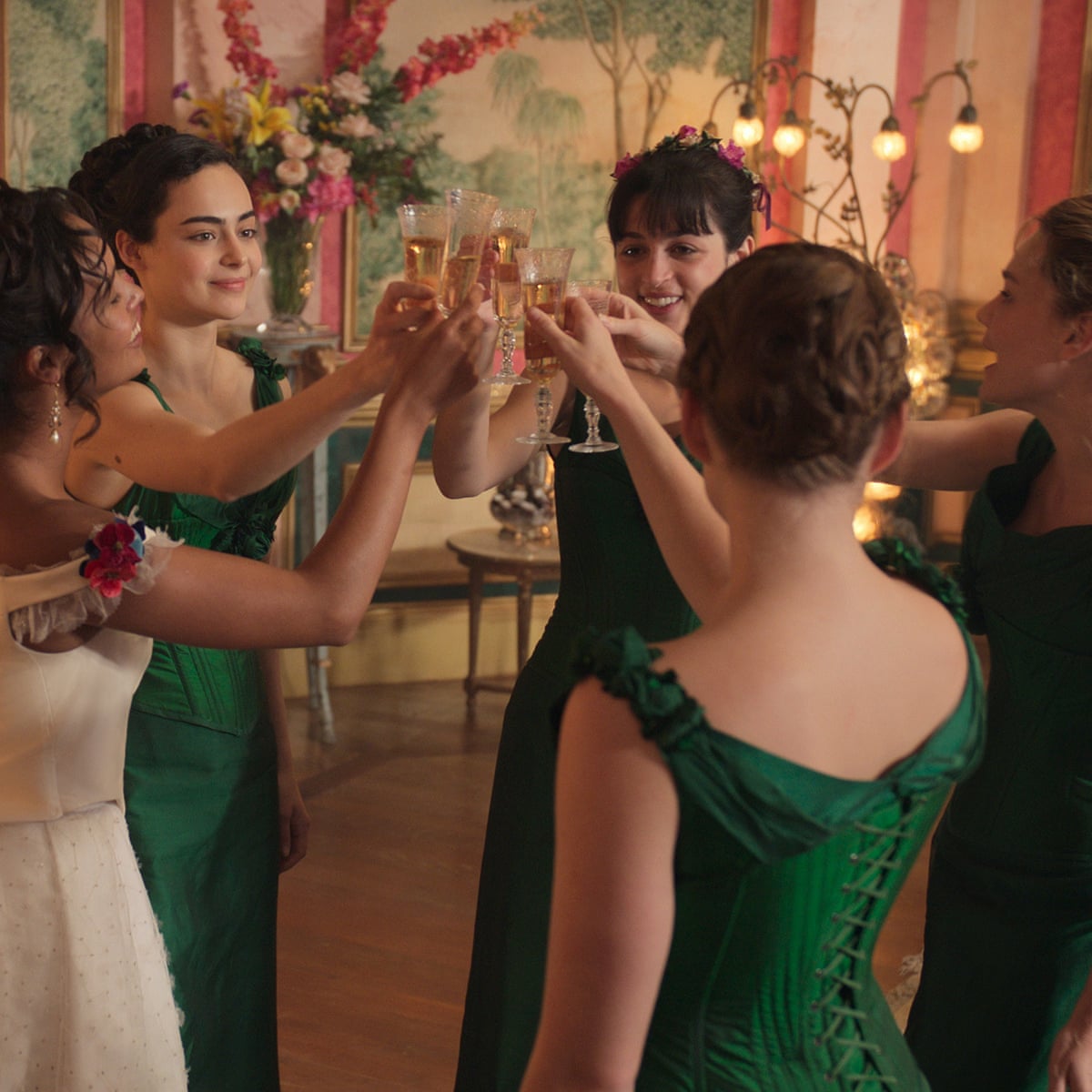
The story opens with preparations for a wedding at the newly built New York mansion of the St. George family. Seventeen-year-old Nan St. George (Kristine Frøseth) is busy helping her best friend, Conchita Closson (Alisha Boe), prepare to marry Lord Richard Marable (Josh Dylan).
Their romance has been passionate and seemingly effortless, but their marriage marks the beginning of a very different chapter. After the wedding, Conchita will move to the United Kingdom, where she must adapt to the expectations of Richard’s traditional and deeply conservative family.
Although Richard clearly loves his bride, he is already anxious about how his relatives will react to her personality, her American upbringing, her family’s newly acquired wealth and her skin color. The contrast between Conchita’s lively nature and the Marables’ rigid worldview quickly becomes an important source of tension.
Recognizing how difficult the transition could be, Richard invites several American women to accompany the newlyweds to England. Among them are Nan, her older sister Jinny (Imogen Waterhouse), their mother Patricia St. George (Christina Hendricks), and the Elmsworth sisters, Lizzy (Aubri Ibrag) and Mabel (Josie Totah).
The journey is intended to give the young women an opportunity to find suitable husbands while providing Conchita with familiar company in an unfamiliar environment. But what awaits them in London is far more complicated than the romantic adventure they might have imagined.
Five Women, Different Ambitions and Difficult Choices
By the time Nan arrives in London several months later, Conchita is pregnant and visibly unhappy. Life among the Marables has proved painfully isolating, with the family’s cold judgment leaving little room for her personality or independence.
Nan, meanwhile, has little enthusiasm for the competitive world of aristocratic matchmaking. She is far less interested in securing a husband than her older sister Jinny, whose determination to marry threatens to undermine her friendships and brings a long-standing family secret into the picture.
Nan’s position becomes increasingly complicated when she attracts the attention of two very different men. Her intelligence and outspoken nature catch the eye of Theo, Duke of Tintagel (Guy Remmers). She also reconnects with Guy Thwarte (Matthew Broome), the duke’s closest friend, whom she briefly encountered during his time in New York.
Although Nan initially finds herself caught between the two men, the series gradually reveals that romance is only one part of the larger story. Each woman faces her own struggles as she attempts to navigate a society that offers wealth and status to some while demanding silence and obedience from others.
Conchita must confront the emotional consequences of her marriage. Jinny’s pursuit of security comes with difficult personal compromises, while Lizzy and Mabel encounter challenges of their own. Even Patricia, Nan’s mother, must reckon with the limitations and expectations that have shaped her life.
Through these parallel storylines, The Buccaneers examines the different ways women attempt to protect themselves, pursue happiness and find a measure of independence in a world where they have little formal power.
A Fast-Paced Drama That Doesn’t Always Give Its Characters Enough Room

One of the series’ biggest strengths is also one of its weaknesses: its brisk storytelling.
Across eight feature-length episodes, The Buccaneers moves rapidly through weeks and months, introducing numerous relationships and personal conflicts along the way. The momentum keeps the drama lively, but it occasionally comes at the expense of deeper character development.
Several storylines could have benefited from more time. Conchita’s extended family, for instance, remains largely absent from the narrative, receiving little attention despite the importance of her marriage and its consequences.
The women also face serious experiences involving abuse, revelations about sexual identity, public humiliation and profound isolation. These subjects introduce emotional weight into what might otherwise appear to be a glamorous period romance. However, the limited time devoted to certain characters means that some of these experiences do not receive the depth they deserve.
An additional two episodes might have allowed the series to explore the women’s individual journeys more intimately, particularly the challenges of adapting to Britain’s restrictive social environment.
Nan’s romantic entanglements with Theo and Guy are initially intriguing, but the frequent shifts between storylines make it difficult for the audience to become fully invested in the emotional intensity of the love triangle. At times, the central romance feels less compelling than the supporting characters’ struggles.
Interestingly, the dynamic between Nan, Theo and Guy becomes genuinely captivating only in the season finale, titled “Wedding of the Season.” After spending much of the series building their complicated relationships, the final episode finally brings their emotional conflicts into sharper focus.
In many ways, the supporting characters provide the show’s most consistently engaging material. Conchita, Patricia, Lizzy and Mabel each bring distinctive perspectives and personal challenges to the narrative. Giving these women even more room to develop could have created a richer and more layered drama.
Colorful Costumes, Modern Music and a Refreshing Period Setting
Despite its uneven pacing, The Buccaneers remains an enjoyable and appealing series, particularly for viewers who appreciate period dramas with a contemporary edge.
Its visual style immediately distinguishes it from more traditional historical productions. Bright, expressive costumes, playful accessories, pink poodles and the young women’s uninhibited laughter create a striking contrast with the restraint and formality of British high society.
The surrounding landscapes add another layer of beauty, while the soundtrack features contemporary female artists, including Olivia Rodrigo and Taylor Swift. These musical choices give the series a distinctly modern atmosphere without losing sight of its 19th-century setting.
The result is a world that feels more adventurous and emotionally accessible than the stiff historical environments often associated with traditional period dramas.
The young cast also captures something universal about entering adulthood: the excitement of discovering new possibilities, the pain of making difficult decisions and the uncertainty of trying to understand who you are while others are busy deciding who you should become.
Beneath the fashionable presentation and romantic complications, the series recognizes that these struggles are not limited to one particular era. The desire for independence, acceptance and meaningful relationships remains relevant across generations.
Is The Buccaneers Worth Watching?

Imagine Bridgerton and The Gilded Age coming together, but with a more rebellious spirit, a louder personality and a sharper focus on women’s friendships. That is perhaps the closest description of The Buccaneers.
However, reducing the series to another romantic period drama would overlook what makes it distinctive. Romance is certainly part of the story, but its deeper emotional foundation is built around female relationships, unexpected betrayals and the sacrifices women make to escape the expectations imposed upon them.
The series is ultimately a feminist love story, not simply about finding the right man, but about women learning to stand up for themselves and one another. Its characters may live in a world governed by wealth, social status and family reputation, yet their struggles reveal how easily shame and social judgment can become instruments of control.
Although the rapid storytelling and underdeveloped romantic triangle occasionally weaken its impact, The Buccaneers compensates with an appealing ensemble, vibrant visual identity and an engaging exploration of the cultural divide between America and Britain.
The first three episodes of The Buccaneers premiered on Apple TV+ on November 8, 2023, with subsequent episodes released weekly on Wednesdays.