The Cook of Castamar (2021): A Lavish Spanish Period Drama Filled With Forbidden Love, Palace Intrigue and Hidden Desires
Set in 18th-century Spain, The Cook of Castamar brings together the elegance of aristocratic life, the complexities of forbidden romance and the darker secrets hidden behind palace walls. At its heart is an unlikely love story between a gifted young cook and a widowed duke, whose growing feelings challenge the rigid social boundaries of their time.
Added to Netflix in 2021, this twelve-part Spanish period drama is based on Fernando J. Muñez’s 2019 novel, La cocinera de Castamar. With its elaborate costumes, beautiful cinematography and richly detailed settings, the series creates an immersive portrait of 18th-century society. Yet beneath its elegant exterior, it explores issues that remain relevant today, including racism, sexual harassment, coercion, sexism, injustice and homophobia.
While many of the characters use intimacy as a means of securing power, pursuing pleasure or escaping unhappy circumstances, the central romance develops along a very different path. The relationship between the two leads is built on loyalty, tenderness and the belief that genuine love can endure even the greatest hardships.
A Love Story Begins Behind the Walls of Castamar

The story unfolds in 1720, on the outskirts of Madrid, at the palace of Don Diego, the Duke of Castamar. Spanish actor Roberto Enríquez plays the widowed nobleman, while Michelle Jenner portrays Clara Belmonte, the talented cook whose arrival will gradually change his life.
Around them is a large ensemble of aristocrats, servants, friends and rivals. The contrast between the two worlds gives the series much of its appeal, recalling the social dynamics of Upstairs, Downstairs and Downton Abbey. The wealthy residents occupy the grand rooms above, while the servants navigate their own complicated relationships and rivalries below stairs.
The opening sequence takes viewers back to the tragedy that shattered Diego’s happiness. His beloved wife, Duchess Alba, reveals that she is pregnant with their heir before being thrown from her horse and dying.
Twenty months later, Diego remains consumed by grief. He has withdrawn from society, rarely leaves his palace and relies on alcohol to numb the pain of losing his wife. His mother, Doña Mercedes, his “Black brother” Gabriel and his close friend Alberto all try to persuade him to stop mourning and return to public life.
But their efforts are not enough. King Felipe V eventually intervenes, making it clear that Diego cannot remain isolated forever.
King Felipe V and the Pressure to Remarry

Played by Joan Carreras, King Felipe V is one of the series’ most intriguing characters. The historical monarch, a grandson of Louis XIV and María Teresa, is portrayed as a complicated figure whose behavior shifts between vulnerability, comedy, delusion, emotional torment and considerable authority.
The series also presents the king as a man familiar with personal loss. After the death of his beloved first wife, María Luisa, he has married Isabel, creating a parallel between his experience and Diego’s struggle to rebuild his life after losing Duchess Alba.
Unable to ignore the king’s demands, Diego accepts a new position as Council Secretary. He also agrees to host a grand gala at Castamar, bringing together friends, acquaintances and members of the royal family, including King Felipe and Queen Isabel.
The gathering marks the beginning of renewed pressure on Diego to find another wife. His mother has already identified her preferred candidate: Amelia Castro, a noblewoman whose circumstances have fallen on hard times.
Portrayed by María Hervás, Amelia is an interesting mixture of naivety and calculation. Her nervous laughter often accompanies a personality that is not quite as innocent as it first appears.
Her situation becomes even more complicated through the involvement of Sol Montijos, played by Marina Gatell, and Enrique de Arcona, portrayed by Hugo Silva. Both characters have their own agendas and are prepared to manipulate Amelia to achieve their objectives.
Behind the Palace’s Elegant Facade, Everyone Has Secrets

One of the series’ central themes is the way people use sex and romantic relationships to pursue their own interests. Among the aristocracy, intimacy is frequently connected to money, status, ambition and personal escape.
Sol, for example, is trapped in an unhappy marriage to an elderly but wealthy and titled husband. Seeking a way out of her loveless situation, she begins an affair with a much younger man, Francisco, played by Maxi Iglesias.
Alfredo, portrayed by Jaime Zatarain, also begins confronting his previously unacknowledged homosexuality after being seduced by a young acquaintance named Ignacio, played by Carlos Serrano-Clark.
Meanwhile, Enrique pursues Amelia for his own purposes. By seducing her, he encourages her to deceive Diego and push him toward marriage, turning their relationship into another instrument of manipulation.
The servants downstairs are hardly free from these complications. For them, sexual relationships can offer an escape from exhausting daily routines, but they can also become a means of gaining influence or securing advantages. Even the palace’s strict and seemingly uptight housekeeper has a sexual history of her own.
Clara enters this complicated household after the previous cook is dismissed for being discovered in an intimate encounter with another servant. Taking over the kitchen, she soon proves that her abilities are far beyond those of an ordinary palace employee.
Clara’s Cooking Changes Everything
Clara’s extraordinary talent quickly makes her stand out. Her dishes leave the aristocrats delighted, creating a kind of sensual pleasure that, in the series’ portrayal, can be even more powerful than their romantic encounters.
Her cooking eventually draws Diego into the kitchen, where he meets the new apprentice. Impressed by her abilities, he appoints her head cook of the palace.
This moment brings the worlds above and below stairs together in a way that neither character could have anticipated. Their first encounter establishes the connection that will gradually develop into the central romance of the series.
Unlike the other relationships surrounding them, Clara and Diego are presented as people guided by fidelity and a strong sense of morality. Both believe that genuine love can survive beyond death, even as they struggle with the possibility of finding happiness again.
Diego’s attraction to Clara initially develops through her food and the sensory experience of her cooking rather than through immediate physical desire. Her talent draws him closer, allowing their relationship to grow through small, intimate moments.
One particularly memorable scene involves Diego helping Clara prepare fondant icing. Although it is arguably the series’ most sensual sequence, it remains entirely chaste. The tension comes not from explicit intimacy but from the tenderness and growing attraction between the two characters.
A Romantic Contrast to the Darkness Around Them
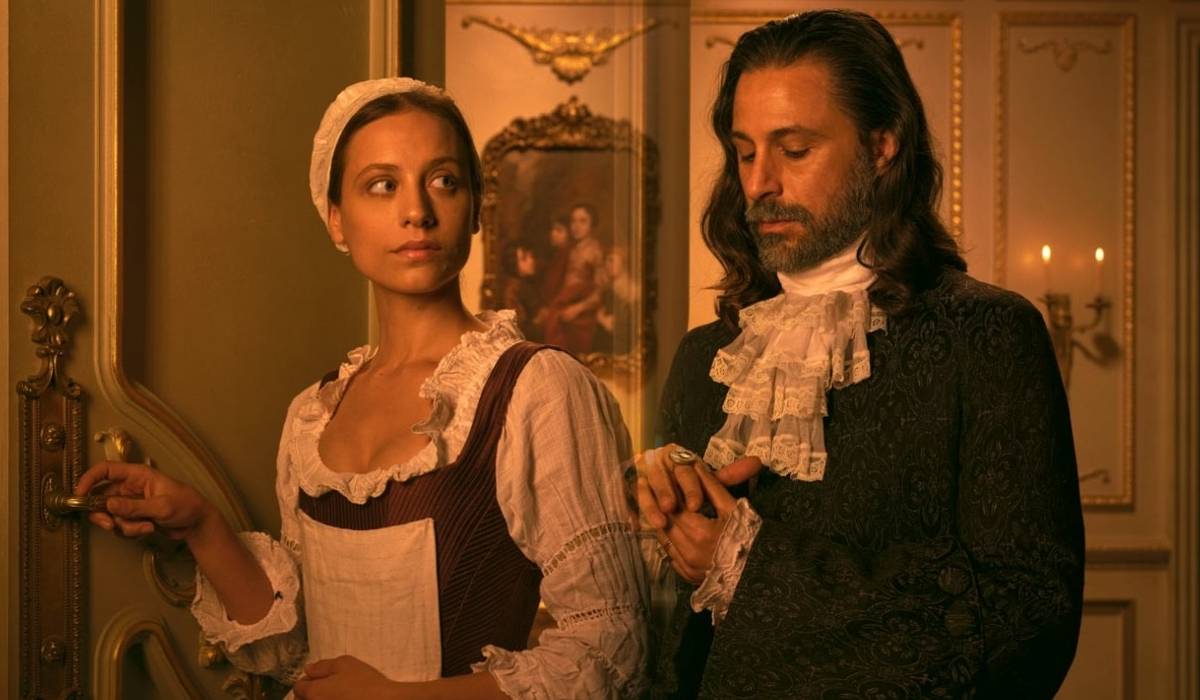
The visual storytelling reinforces the difference between Clara and Diego’s relationship and the intrigues unfolding throughout Castamar.
Clara is frequently shown walking through the palace at night with a lighted candle. Her kitchen is similarly illuminated by dozens of candles, their glow reflected in her hazel eyes.
These images create a recurring sense of warmth and hope amid the palace’s atmosphere of deception, illicit affairs and personal ambition. Clara and Diego become symbols of light in a world where many characters are driven by desire and self-interest.
Their romance also gives the series an emotional center. While the surrounding storylines explore manipulation, betrayal and the consequences of using others for personal gain, the relationship between the cook and the duke offers a more traditional vision of love.
That contrast is central to the drama’s appeal. Rather than treating every character as equally virtuous or corrupt, the series examines how different people respond to grief, temptation, power and the desire for happiness.
Does The Cook of Castamar Deliver a Satisfying Ending?

At its core, The Cook of Castamar is a romantic moral tale about love, desire and forgiveness. It explores not only the difficulty of accepting one’s own mistakes but also the challenge of forgiving the people who have caused pain.
The story ultimately follows a familiar period-drama tradition: those who commit wrongdoing face the consequences, while those who remain true to their values are rewarded. The conclusion offers the kind of hopeful resolution that makes the series feel like a modern fairy tale rather than a relentlessly bleak historical drama.
Season 1 brings the main storyline to a satisfying close, giving viewers a sense of resolution. Nevertheless, the world and characters leave room for further exploration, with enough potential material to support another season.
However, as of the end of 2021, there had been no announcement confirming that Season 2 was in development.
With its lavish production design, compelling ensemble cast and romance set against a backdrop of aristocratic intrigue, The Cook of Castamar offers an appealing choice for viewers who enjoy historical dramas centered on love, social divisions and complicated family relationships. Fans of Downton Abbey and other costume dramas may particularly appreciate its blend of upstairs-and-downstairs storytelling, forbidden affairs and an enduring romance at the heart of the palace.