When Sly and the Family Stone stepped onto The Ed Sullivan Show stage in the late 1960s to perform “I Want To Take You Higher,” it wasn’t just another TV appearance — it was a cultural jolt captured live on national television. At a time when music on mainstream broadcast was still finding its voice, this band didn’t play into the format — they redefined it, bringing an infectious fusion of funk, soul, rock, and unapologetic joy straight into living rooms across America.
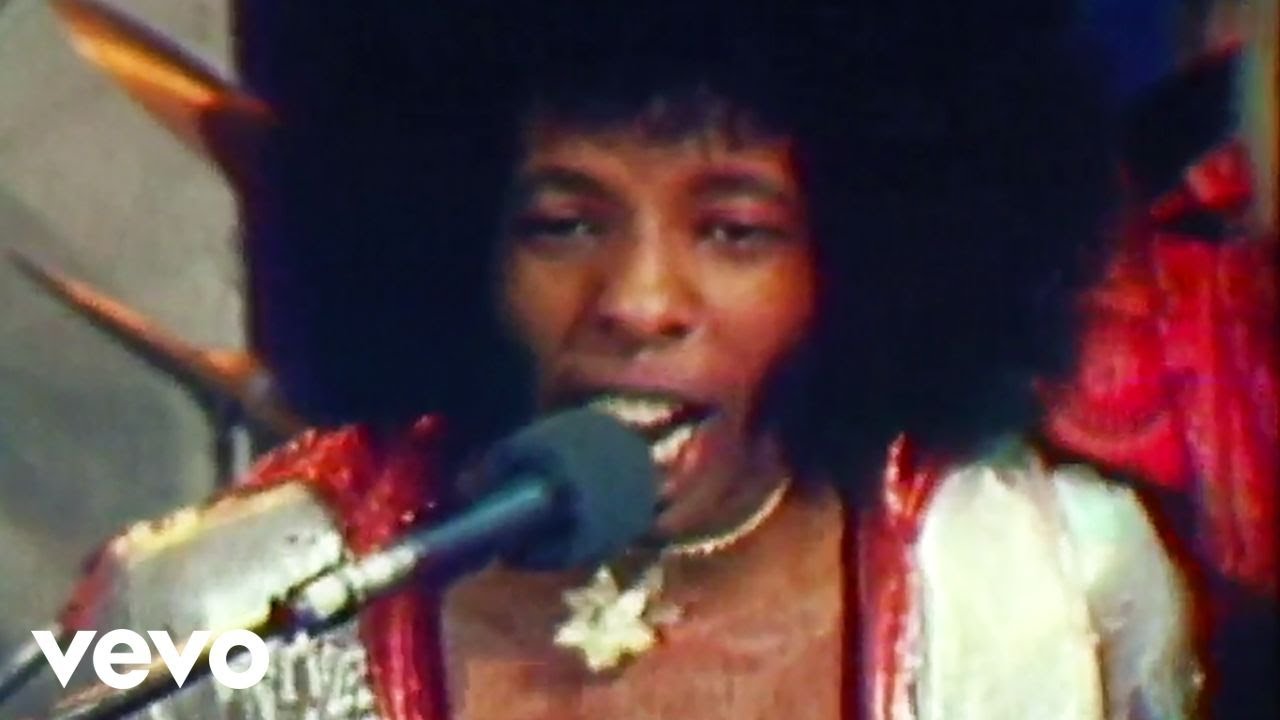
From the very first chord, the energy was undeniable. This wasn’t a measured, camera-friendly performance; it was a full-body transmission of rhythm and spirit. As the song kicked in, the studio audience — usually reserved, polite, seated — couldn’t help but respond physically. Feet tapped. Shoulders swayed. Some even rose from their seats, energized by a sound that demanded movement. “I Want To Take You Higher” wasn’t a song about elevation in the abstract — it was an invitation, a call to rise, to feel, to connect.
What made this moment so remarkable wasn’t just the band’s tight musicianship or electrifying chemistry; it was the context. The Ed Sullivan Show was one of the most widely watched programs on television, a platform that often presented polished entertainers performing neatly packaged hits. Into that space came Sly Stone and his ensemble — vibrant, unpredictable, and irresistibly kinetic. Their music didn’t just fill the studio; it stretched outward, past the camera lenses, into the homes of millions who may have never heard anything quite like it before.
Frontman Sly Stone didn’t just sing — he projected vitality, commanding attention with a presence that was both magnetic and approachable. His bandmates — horn section, rhythm section, backing vocalists — functioned as a single, pulsing organism, every note and beat feeding into an ecstatic whole. The performance was tight, but it never felt rehearsed. It felt alive.
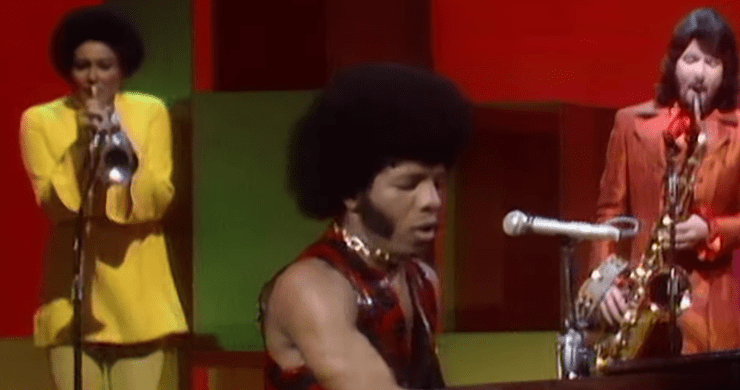
And alive is the only word that truly captures what the audience witnessed. “I Want To Take You Higher” wasn’t background music. It wasn’t filler for a television lineup. It was a moment of transmission — a message broadcast in rhythm and soul, saying something simple and profound: we want you to feel this.
The cultural impact of that performance — airing during an era of social upheaval, shifting identities, and generational change — can’t be overstated. It wasn’t just entertainment; it was affirmation that Black music, funk grooves, and unfiltered exuberance belonged on America’s biggest stage. Decades later, fans still revisit that clip not merely for nostalgia, but because it stands as a historic snapshot: a moment when a band didn’t conform to a medium — they expanded it.
Some songs fill a setlist.
This one lifted a nation’s attention and — just for a few minutes — took it higher.