The ceremony was meant to be celebratory.
Gold light spilled across the stage. Names of achievements echoed politely through the hall. It was a night designed to look backward — to honor decades of music, endurance, and a career that had carried millions through their own lives.
Céline Dion stood at the microphone, elegant and composed, accepting an award that acknowledged not just success, but survival.
She smiled. She thanked the room.
Then she paused.
“There’s a song,” she said quietly, “that I almost never released.”
The applause faded. The tone shifted.
Céline lowered her gaze for a moment, as if deciding whether to continue. When she looked back up, her expression was open — not fragile, but unguarded in a way audiences rarely see.
“I wrote it on the night I almost quit,” she said.
The room held its breath.
She didn’t name the illness. She didn’t dramatize the struggle. She didn’t need to. Those who had followed her journey understood the weight behind the words — the exhaustion, the uncertainty, the fear of losing the one thing that had always defined her.
“That night,” Céline continued, “my voice didn’t feel like mine anymore. My body didn’t feel like something I could trust.”
She spoke slowly, deliberately, letting the truth land without decoration.
“I remember sitting at the piano, thinking… maybe this is where it ends.”
The admission moved through the audience like a low current. This wasn’t a story of triumph yet. It was a story of doubt — the kind most legends are never allowed to confess.
“I didn’t want to be brave,” she said. “I just wanted to stop hurting.”
Céline glanced toward the wings of the stage, then back to the crowd.
“And then,” she said softly, “my youngest son walked into the room.”
The shift was immediate. Parents leaned forward. The room softened.

“He didn’t know what was happening,” Céline said. “He didn’t understand doctors or diagnoses or fear.”
She smiled faintly at the memory.
“He just looked at me and said… ‘Mom, don’t stop.’”
Her voice caught — just once.
“Not ‘be strong.’ Not ‘you’ll be okay.’ Just… ‘don’t stop.’”
The simplicity of it landed harder than any speech could have.
“That sentence,” Céline said, pressing a hand to her chest, “changed everything.”
She explained that the song — the one the audience had heard for years as a quiet anthem of perseverance — was written in the hours that followed. Not as a promise to the world. Not as a declaration of comeback.
But as a response to her child.
“I didn’t write it to be released,” she admitted. “I wrote it so I wouldn’t disappear.”
There was no movement in the hall now. No rustle of programs. No clinking glasses. Just listening.
“I almost kept it locked away,” Céline said. “Because it felt too exposed. Too unfinished. Too honest.”
She looked out over the audience, eyes shining.
“But every time I tried to let it go, I heard his voice again.”
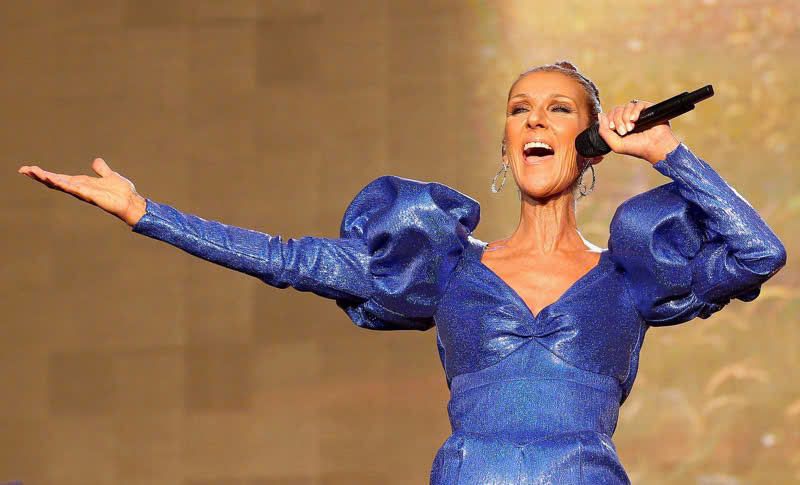
Mom, don’t stop.
Then something unexpected happened.
The lights shifted gently toward the side of the stage.
A young man stepped forward.
Her son.
The room gasped — not loudly, but collectively.
He didn’t rush. He didn’t wave. He walked with the quiet confidence of someone who didn’t need to perform to be seen. Céline turned toward him, her hand flying to her mouth.
“I didn’t know he would be here tonight,” she said, voice trembling.
He took the microphone — not as a celebrity’s child, but as a witness to a moment that had shaped them both.
“I don’t remember everything from that night,” he said gently. “I just remember my mom looking tired… and scared.”
He paused, swallowing.
“I didn’t know what to say. I just knew I didn’t want her to stop being her.”
Tears rolled freely now — from Céline, from the audience, from parents who recognized the power of a child’s unfiltered love.
“That’s all I meant,” he said. “Don’t stop.”
Céline reached for him, resting her forehead briefly against his shoulder.
“Thank you,” she whispered.
Then she turned back to the piano.
“Tonight,” she said, steadying herself, “I want to sing that song the way it was written.”
The first notes began — familiar, but altered. The melody was the same, but the opening line was new.
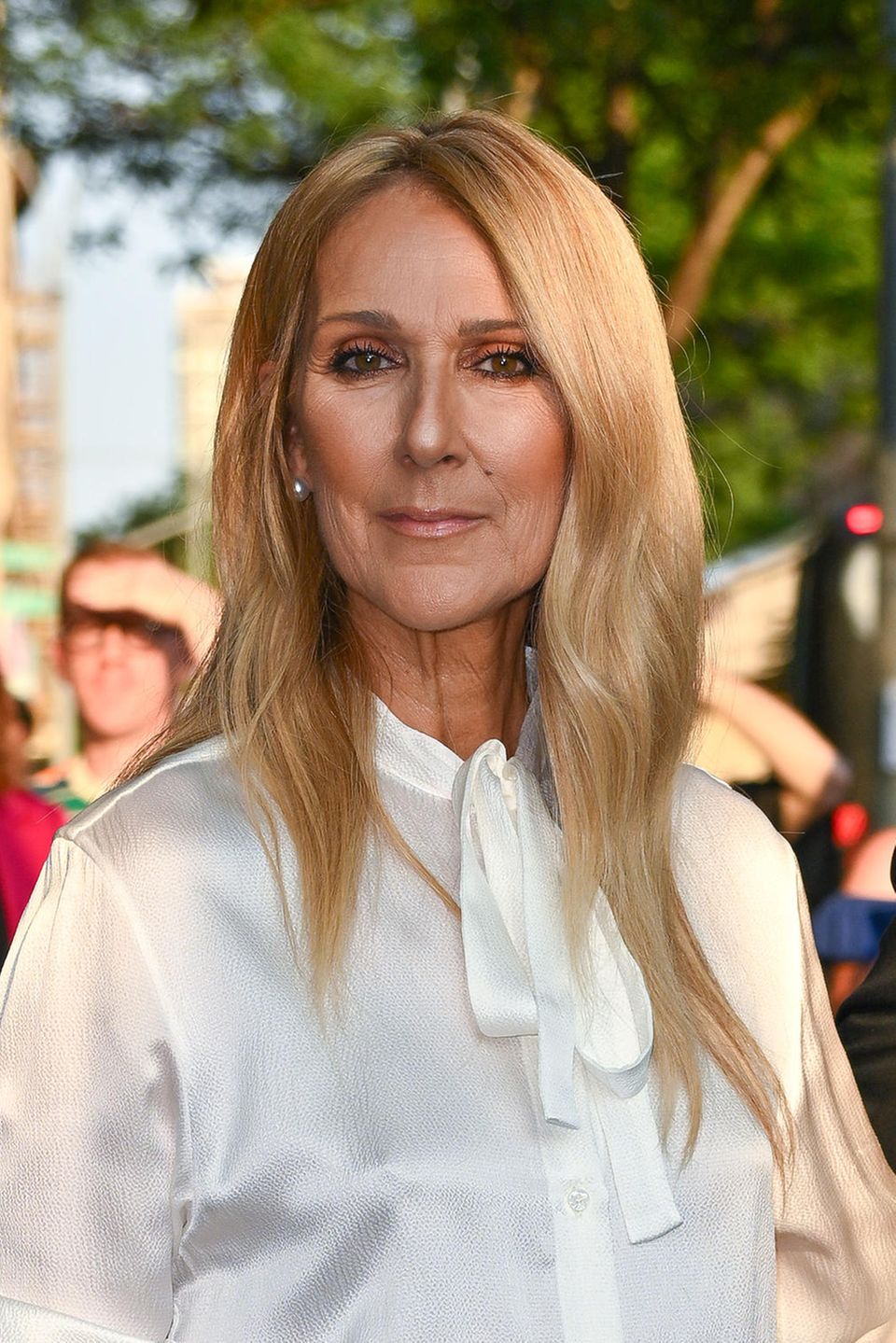
“This one,” Céline sang softly, her voice wrapped in emotion rather than force,
“is for the boy who wouldn’t let me disappear.”
The room broke open.
The song unfolded differently now — not as resilience, but as gratitude. Not as triumph, but as presence. Céline sang with restraint, allowing the words to breathe, allowing imperfection to remain.
Her son stood just behind her, hands clasped, eyes fixed on the woman who had always been his mother first — and a legend second.
When the final note faded, Céline didn’t hold it for effect. She let it go.
The applause that followed was not explosive. It was sustained. Reverent. The kind of applause that says we understand now.
Céline turned to her son and smiled through tears.
“Because of you,” she said quietly, “I’m still here.”
That night wasn’t about awards.
It wasn’t about survival as spectacle.
It was about a moment when a voice almost went silent — and a child’s simple love kept it alive.
Some songs are written for charts.
Some are written for crowds.
And some are written in the dark, for the one reason that matters most:
To remind someone they are still needed.
On that stage, Céline Dion didn’t just sing a song.
She honored the night she chose to stay —
and the boy who made sure she did.