“INTIMIDATED AND SCARED”: DEAN PENNEY TESTIFIES IN COURT OVER RCMP “MR. BIG” STING OPERATION
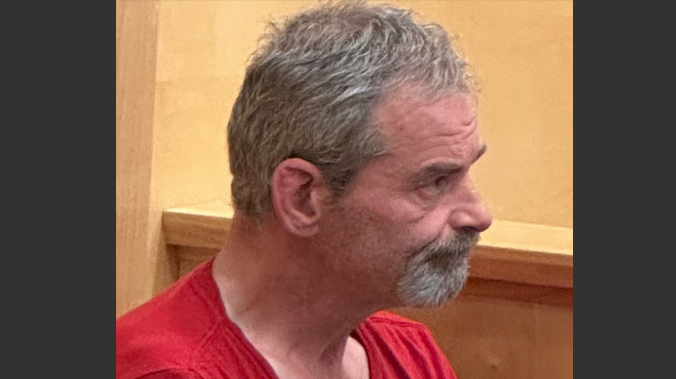
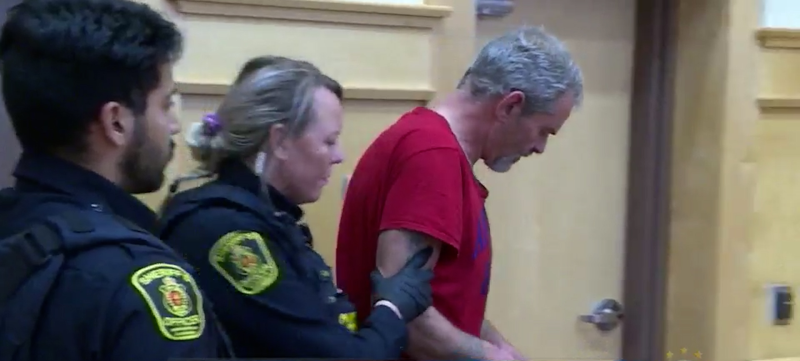
In a highly charged session at the Supreme Court of Newfoundland and Labrador, murder suspect Dean Penney took to the witness box for a second consecutive day. Penney spoke candidly about his psychological state during a sophisticated undercover RCMP sting operation, revealing that he felt deeply “intimidated and scared” while working for what he believed was a powerful, real-world criminal syndicate.
Penney stands accused of first-degree murder in the December 2021 disappearance and death of his estranged wife, Jennifer Hillier-Penney. The bedrock of the Crown’s prosecution relies heavily on evidence gathered during a complex undercover operation widely known in Canadian law enforcement as a “Mr. Big” sting.
The Pressure of the Fictional Syndicate
Testifying before the judge and jury, Penney detailed the immense mental toll of interacting with undercover Royal Canadian Mounted Police (RCMP) officers. The operatives were playing meticulously crafted characters within a fictional, high-stakes crime organization designed to gradually gain Penney’s trust and extract a confession.
While the prosecution argues that Penney freely integrated himself into the group, Penney’s defense paints a drastically different picture: one of coercive manipulation targeted at a vulnerable, financially desperate individual.
+----------------------------------------------------------------------------+
|                          THE MR. BIG STING CONTEXT                         |
+--------------------------+-------------------------------------------------+
| Accused:                 | Dean Penney                                     |
| Undercurrent Case:       | First-degree murder of Jennifer Hillier-Penney   |
| Investigative Technique: | RCMP "Mr. Big" Undercover Operation             |
| Defense Strategy:        | Claiming financial coercion and intimidation   |
| Prosecution Strategy:    | Presenting voluntary confessions made to "boss" |
+--------------------------+-------------------------------------------------+
Penney testified that the sheer scale of the organization and the aggressive, powerful personas of the undercover handlers left him in a constant state of fear. However, despite feeling deeply unsettled and intimidated by the criminal elements presented to him, Penney maintained that he was trapped by his economic reality. He explained to the court that he desperately needed the cash payouts provided by the handlers and was holding out hope for a stable, long-term job that the organization had repeatedly promised him.
What is a “Mr. Big” Operation?
The tactic utilized against Penney is one of the most controversial and tightly regulated investigative tools in the Canadian legal system.
The “Mr. Big” Blueprint: Undercover operatives recruit a prime suspect into a fake criminal ring, starting with low-level tasks (like delivering packages) for quick financial rewards. Over weeks or months, the suspect is introduced up the ladder until they meet the fictional crime boss—”Mr. Big.” To fully join the inner circle and secure protection from the law, the suspect is pressured to confess to their past crimes as a sign of absolute loyalty.
Because these operations rely on building scenarios of immense power, wealth, and latent violence, Canadian courts view confessions obtained through them with a high degree of skepticism. Under landmark Supreme Court of Canada precedents, confessions yielded during a Mr. Big sting are treated as presumptively inadmissible unless the prosecution can definitively prove that the reliable value of the confession outweighs the prejudice of the deceptive tactics and the financial coercion involved.
A Polarized Legal Battle
As CBC reporter Colleen Connors noted from the courtroom, this testimony strikes directly at the heart of the trial’s central debate.
-
The Defense argues that Penney’s eventual statements to the undercover operatives were not an authentic admission of guilt, but rather the fabrications of an intimidated man boasting to appease dangerous individuals and secure financial survival.
-
The Prosecution maintains that the operational safeguards were strictly followed and that Penney’s admissions provide a reliable, accurate window into what happened to Jennifer Hillier-Penney in late 2021.
With Penney’s cross-examination continuing to unfold, the jury faces the complex task of weighing the accused’s stated fear against the concrete details of the recordings captured by the RCMP’s hidden microphones.