THE MAN OUTSIDE THE HOTEL
PART 1 — THE MEAL THAT COST NOAH HIS JOB
Noah Carter was fired for giving away his own dinner.
Not the hotel’s money.
Not a guest’s meal.
Not something stolen from the kitchen.
His dinner.
The one meal the hotel gave him during a ten-hour shift.
It happened on a cold Thursday evening in Boston, after rain had washed the sidewalks black and turned every passing headlight into a blue-white reflection across the pavement.
The restaurant sat inside one of the city’s most prestigious hotels.
The Calder House.
Old Boston name.
Modern luxury.
Polished stone.
Brass lamps.
Tall glass doors.
A dining room where a bowl of soup cost more than Noah sometimes spent on groceries for two days.
Outside the entrance was a covered stone terrace where guests waited for cars.
A valet stand.
Two benches.
Heated lamps that were rarely turned on unless paying customers were nearby.
Noah Carter was twenty-one.
Short brown hair.
Kind face.
White shirt.
Deep navy vest.
Charcoal trousers.
Black work shoes polished every morning even though the soles were beginning to separate at the heel.
He had worked at the Calder House restaurant for eleven months.
Five nights a week.
Sometimes six.
He was studying part-time at Bunker Hill Community College and trying to save enough to transfer.
Hospitality management.
Not because luxury hotels fascinated him.
Because his mother had worked in restaurants most of his childhood, and Noah understood something many people didn’t:
a dining room could look effortless only because someone somewhere was exhausted.
Noah was good at the work.
He remembered allergies.
Anniversaries.
Which regular wanted sparkling water before sitting down.
Which guest hated being called “sir.”
He also remembered staff names.
Dishwashers.
Housekeepers.
Valets.
People managers often referred to only by department.
Mr. Collins considered Noah both excellent and frustrating.
Richard Collins was fifty-two.
Restaurant manager.
Gray hair.
Dark charcoal suit.
Pale blue shirt.
Black tie.
He had worked in luxury hospitality for almost twenty-five years.
Collins believed in standards.
That word appeared in nearly every conversation he had with staff.
Standards of service.
Standards of dress.
Standards of appearance.
Standards of discretion.
Standards, Noah had learned, often meant making sure wealthy people never had to see anything uncomfortable.
At 7:38 that night, the dinner rush slowed briefly.
Noah collected his employee meal from the kitchen.
Roasted chicken.
Potatoes.
Vegetables.
Nothing fancy.
He hadn’t eaten since ten that morning.
He carried the tray toward the staff hallway.
Then stopped.
Through the open glass entrance, he saw an old man sitting outside.
Harold Bennett.
Noah did not know his name yet.
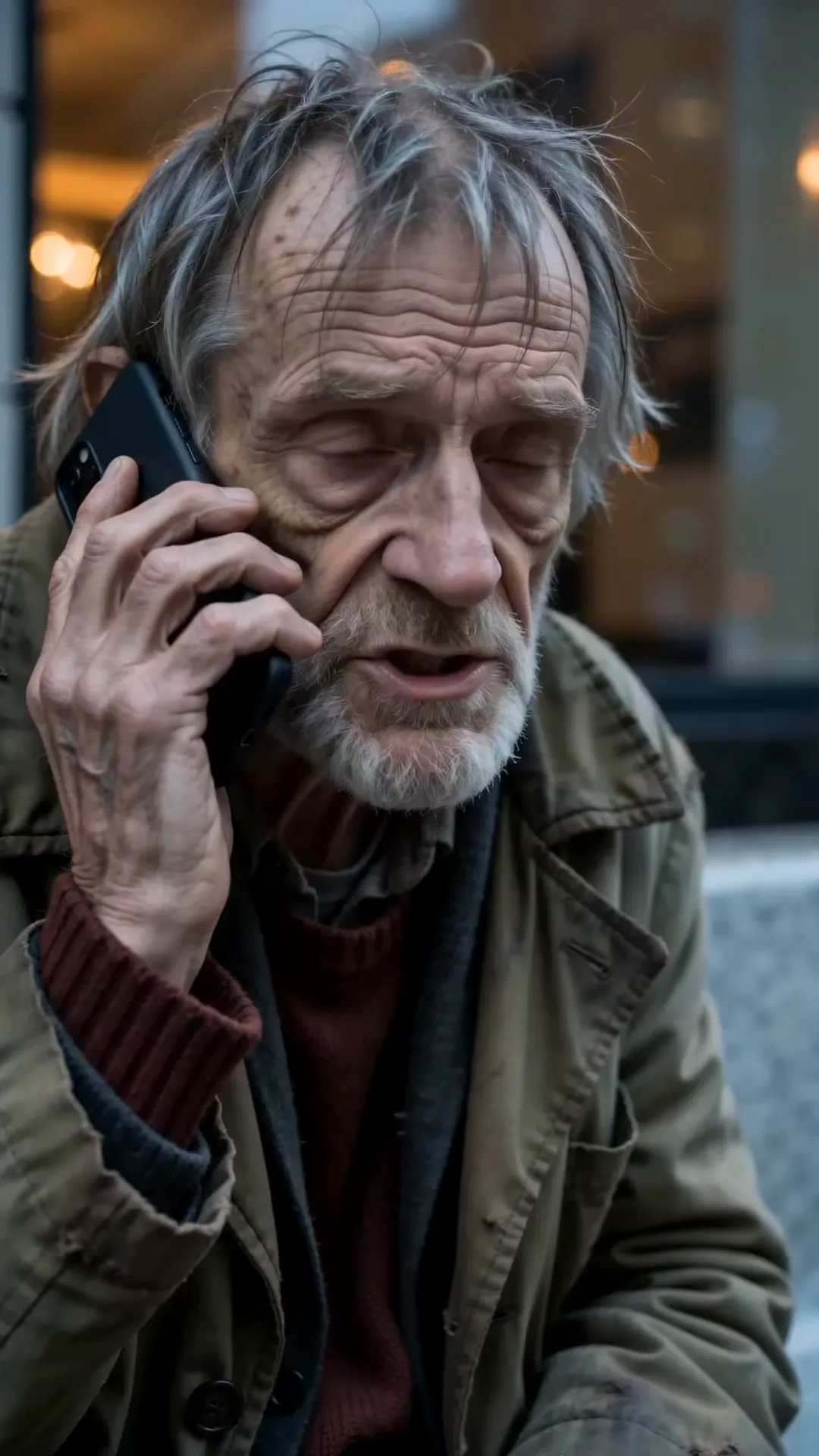
To Noah, he was simply an elderly man in a faded olive coat.
Seventy-four.
Thin.
Gray messy hair.
White stubble.
Weathered face.
Burgundy sweater visible beneath the coat.
Dark gray trousers.
Old brown boots darkened by rain.
He sat at the far end of the stone bench.
Hands between his knees.
Shoulders slightly hunched against the cold.
No luggage.
No cup.
No sign.
No request for money.
That somehow made Noah notice him more.
The man looked toward the tray.
Only for a second.
Then lowered his eyes.
Noah stopped walking.
A server named Madison passed behind him.
“Break?”
“In a minute.”
He looked outside again.
The man was shivering.
Noah carried the tray through the glass doors.
Cold air hit his face.
Harold looked up.
Noah approached slowly.
“Sir?”
The old man straightened.
“Yes?”
Noah put the tray beside him.
Harold frowned.
“What’s this?”
“Dinner.”
“I didn’t order anything.”
“I know.”
Harold looked at the plate.
Then Noah.
“I can’t pay you.”
Noah answered:
“You don’t have to.”
Harold stared at him.
“Is this from the hotel?”
“It was my dinner.”
Something changed in the old man’s eyes.
“You haven’t eaten?”
Noah shrugged.
“I’ll find something later.”
Harold shook his head.
“No.”
Noah pushed the tray slightly closer.
“It’s already out here.”
“That isn’t an argument.”
“It is when the food gets cold.”
Harold almost smiled.
Then his stomach betrayed him with a quiet sound.
Noah pretended not to hear.
Harold noticed that too.
He picked up the fork.
“Thank you.”
Noah nodded.
“Of course.”
Harold began to eat.
Slowly at first.
Then with the concentration of someone far hungrier than he wanted anyone to know.
Noah stood nearby for a few seconds.
“You want coffee?”
Harold looked up.
“No.”
“You sure?”
“I’m sure.”
Noah smiled.
“Okay.”
Then the glass doors opened behind him.
Mr. Collins stepped outside.
His expression changed the moment he saw the tray.
“Noah.”
Noah turned.
Collins looked at Harold.
Then the hotel plate.
“That food isn’t for people outside.”
Harold stopped chewing.
Noah felt something tighten in his chest.
“It was my dinner.”
Collins looked at him.
“That’s not the point.”
“It was assigned to me.”
“You carried hotel property outside.”
“The plate?”
“The meal. The tray. The presentation.”
Noah almost laughed.
He didn’t.
Harold put down the fork.
Noah said:
“I’ll bring the tray back.”
Collins’s expression hardened.
“You know the policy.”
“No outside distribution.”
“Exactly.”
“I wasn’t distributing anything.”
“You gave food to someone on hotel property without authorization.”
Noah glanced at Harold.
He hated the way the conversation was turning the old man into an operational category.
Collins continued:
“We have paying guests arriving.”
Noah looked toward the valet.
A couple in expensive coats had just stepped from a black SUV.
They looked toward them.
So did two men waiting near the doors.
Noah lowered his voice.
“He was cold and hungry.”
Collins answered:
“That does not make this your decision.”
“It was my meal.”
Collins stared at him.
Then:
“You’re done here.”
Noah froze.
“What?”
“You heard me.”
Several nearby guests turned.
Noah felt his pulse in his neck.
“Mr. Collins—”
“No.”
Collins kept his voice controlled.
That made it worse.
“You have been warned before about crossing boundaries.”
Noah thought.
Then understood.
A housekeeper’s daughter had waited in the service corridor two months earlier when childcare fell through.
Noah had brought her soup.
Another night, he had let a delivery driver use the staff bathroom after security refused him access.
Small things.
Collins remembered all of them.
Noah said:
“I’d do it again.”
The words came out before he decided to say them.
Collins’s eyes hardened.
“That confirms my decision.”
Noah stood still.
He thought about tuition.
Rent.
His mother asking whether he could cover the phone bill that month.
His younger brother needing new basketball shoes.
His stomach turned.
But he looked at Harold.
The old man was staring at him.
Not eating anymore.
Noah could have apologized.
Maybe Collins would have softened.
He could have said he misunderstood.
That he would never do it again.
Instead, he said nothing.
Collins pointed toward the doors.
“Finish the tables already seated. Then clock out.”
Noah nodded.
“Okay.”
Collins seemed almost disappointed by the lack of argument.
Harold asked:
“You’re firing him over this?”
Collins looked at him.
“This is an internal matter.”
Harold’s face changed.
The tiredness remained.
The worn coat remained.
The cold remained.
But something underneath became very still.
He set down the fork.
Reached inside his coat.
Removed a black smartphone.
Noah noticed immediately.
The phone looked newer than his.
Harold unlocked it.
Raised it to his ear.
Someone answered almost instantly.
Harold said:
“He gave me his meal.”
A pause.
Then:
“Bring my daughter downstairs.”
Collins stopped moving.
Noah stared.
Two hotel employees just inside the door exchanged nervous looks.
Harold kept the phone at his ear.
He listened.
Then said:
“Yes.”
Another pause.
“No. Don’t tell him anything yet.”
He ended the call.
Collins looked at him.
“Your daughter?”
Harold put the phone back to his ear as another call came through.
“Yes.”
He listened.
“Five minutes.”
Then lowered it.
Noah asked:
“Who are you?”
Harold looked at him.
“That’s not the first question you should ask.”
Noah frowned.
“What is?”
Harold looked toward Collins.
“Why did he think firing you was easier than letting me finish dinner?”
Collins’s jaw tightened.
“This is becoming inappropriate.”
Harold almost smiled.
“It became inappropriate before I made the call.”
The glass doors opened.
A woman stepped outside.
Late forties.
Black wool coat.
Professional posture.
Dark hair pulled back.
Behind her came the hotel’s general manager, two senior executives, and a security supervisor.
Noah recognized the woman immediately.
Everyone at the Calder House knew her face.
Eleanor Bennett Hale.
Chief executive officer of Bennett Hospitality Group.
The company that owned the Calder House and eight other luxury properties across New England.
Noah stared at Harold.
Then Eleanor.
She walked directly toward the old man.
“Dad.”
Collins went pale.
Noah stopped breathing for a moment.
Harold looked up.
“You took your time.”
Eleanor glanced at the rain.
“You told me not to draw attention.”
Harold looked at the executives behind her.
“I changed my mind.”
Collins tried:
“Ms. Hale, I can explain—”
Eleanor lifted one hand.
“Not yet.”
She looked at Noah.
“Are you Noah Carter?”
He nodded.
“Yes, ma’am.”
Harold frowned.
“Don’t call her ma’am. It goes to her head.”
Eleanor looked at her father.
“Wonderful.”
The tension broke for half a second.
Then Eleanor saw the tray.
Half-finished meal.
Noah’s face.
Collins’s expression.
“What happened?”
Harold answered:
“He gave me his dinner.”
Eleanor looked at Noah.
“Why?”
Noah hesitated.
“He was hungry.”
Harold nodded.
“That was his entire analysis.”
Eleanor’s eyes softened.
Then hardened again as she turned toward Collins.
“And?”
Collins straightened.
“He violated policy.”
“What policy?”
“No outside food distribution without authorization.”
Eleanor looked at the tray.
“His employee meal?”
“Yes.”
“Which he was entitled to eat?”
“Yes.”
“And he chose to give it away?”
Collins paused.
“Yes.”
Eleanor asked:
“Why was that a firing offense?”
Collins responded:
“It wasn’t solely this incident.”
Noah looked at him.
Eleanor noticed.
“What else?”
Collins listed the other events.
Soup for a child.
Bathroom access.
Helping a housekeeper.
Each sounded smaller when spoken aloud.
Harold stared at him.
When Collins finished, Harold asked:
“What did all those people have in common?”
Collins frowned.
“I don’t understand.”
“They needed something.”
Silence.
Harold continued:
“And he noticed.”
Eleanor looked at Noah.
Then at her father.
“Dad, why are you here like this?”
Noah glanced at Harold’s clothes.
There it was.
The obvious question.
Harold looked toward the street.
“Because I wanted to know what the hotel looked like when no one knew who I was.”
Eleanor closed her eyes.
“You promised you were done doing this.”
Harold smiled faintly.
“I promised I’d stop doing it badly.”
“This is badly.”
“Probably.”
Noah felt irritation rise.
“So this was a test?”
Everyone turned.
Harold looked at him.
Noah continued:
“You sat outside hungry-looking to see what people would do?”
Harold didn’t answer quickly enough.
Noah shook his head.
“You let me lose my job for a test?”
Collins looked uncomfortable.
Eleanor looked at her father.
Harold nodded.
“You have every right to be angry.”
“That’s not an answer.”
“No.”
Harold took a breath.
“I came here for another reason.”
Noah waited.
Harold continued:
“I didn’t know you would be working tonight.”
Noah frowned.
“Why would that matter?”
Harold looked at him.
“Because I know your last name.”
Noah went still.
“Carter?”
“Yes.”
Eleanor turned to her father.
“Dad.”
Harold’s eyes remained on Noah.
“Your father was Daniel Carter.”
Noah’s face changed.
Daniel Carter had died six years earlier.
Forty-seven.
Lung cancer.
Maintenance supervisor.
Hard hands.
Bad jokes.
Red Sox every summer.
Noah remembered him clearly enough for missing him to still hurt.
“How do you know my dad?”
Harold looked toward the hotel doors.
Then at the building.
“Because he worked here.”
Noah shook his head.
“No. He worked maintenance at a hospital.”
“Before that.”
Harold continued:
“Daniel Carter was chief engineer at the Calder House for eleven years.”
Noah stared.
His father had never told him.
Or Noah had been too young to remember.
Eleanor’s expression changed.
She knew the name too.
Harold looked at his daughter.
“Tell him.”
Eleanor hesitated.
Noah noticed.
“What?”
Eleanor answered quietly:
“Your father left this hotel after a dispute.”
Noah felt the world narrow.
“What dispute?”
Harold replied:
“A veteran froze outside these doors.”
Noah looked at the bench.
The same bench.
Harold continued:
“And your father was punished for trying to help him.”
Noah’s eyes went to Collins.
Then the hotel.
Then Harold.
Twenty years earlier, his father had stood almost exactly where Noah was standing now.
And suddenly the meal on the stone bench was no longer the beginning of the story.
It was the echo.
PART 2 — THE MAN DANIEL CARTER REFUSED TO LEAVE OUTSIDE
The executives wanted to move indoors.
Harold refused at first.
“Let him finish.”
He pointed to the food.
Noah almost laughed.
“You mean your food.”
Harold looked at the tray.
“Fair.”
He ate the rest.
Collins stood several feet away.
Eleanor finally ordered the terrace heater turned on.
Harold looked up at it.
“That works?”
The valet supervisor answered:
“Yes, sir.”
Harold frowned.
“Interesting.”
Noah understood.
They could have turned it on earlier.
They simply hadn’t.
When Harold finished, they moved into a private conference room behind the restaurant.
Noah had served wine in that room before.
Never sat at the table.
Now he sat beside the CEO.
Collins sat across from him.
Harold remained in his faded olive coat.
He refused when someone offered to take it.
Eleanor sighed.
“You’re making a point.”
“No.”
“You always say that while making a point.”
Harold looked at Noah.
“Your father started here in 1998.”
Daniel Carter was twenty-five.
Army veteran.
Four years active duty.
Motor transport and facilities work.
No combat decorations.
No dramatic battlefield story.
He had served overseas briefly but never described himself as a hero.
After leaving the Army, Daniel worked building maintenance.
Eventually, the Calder House hired him.
“He was good,” Eleanor said.
Noah looked at her.
“You knew him?”
“I was twenty-seven when I joined the company.”
She smiled faintly.
“He once shut off the water to my office because I ignored three maintenance notices.”
Harold laughed.
“That sounds like Daniel.”
Noah smiled despite himself.
Harold continued.
Daniel rose through facilities.
Engineer.
Assistant supervisor.
Then chief engineer.
He knew the hotel better than almost anyone.
Boilers.
Electrical systems.
Elevators.
Fire doors.
Hidden pipes.
Staff corridors.
And people.
“He was annoying that way,” Harold said.
Noah frowned.
“What way?”
“He noticed.”
The word again.
Daniel noticed when overnight housekeepers had no hot meal.
When a valet’s winter coat wasn’t warm enough.
When the loading-dock heater broke and management delayed repair.
He did not view those things as charity.
He viewed them as operations.
“If a worker can’t feel their fingers, they can’t fix your hotel,” Daniel once told a manager.
Harold liked him.
At the time, Harold Bennett was not retired.
He was chairman and CEO.
He had started Bennett Hospitality with one roadside motel outside Worcester in 1979.
By 2004, the company owned twelve properties.
The Calder House was its crown jewel.
Then came a January night in 2006.
Boston temperature dropped below fifteen degrees Fahrenheit.
Wind chill lower.
A man named Thomas Reed arrived outside the hotel.
Sixty-three.
Vietnam veteran.
Recently evicted.
Living between shelters.
He was not a hotel guest.
Security asked him to move.
He refused because he said he was waiting for a bus.
The bus had stopped running due to weather.
Security called a supervisor.
The supervisor told them the entrance had to remain clear.
Thomas was moved to the edge of the property.
Daniel saw him.
He asked security:
“Where’s he supposed to go?”
They didn’t know.
Daniel brought Thomas into a maintenance vestibule.
Coffee.
Blanket.
Space heater.
Then called a veterans’ outreach number.
The outreach van would take forty minutes.
A manager found out.
Not Harold.
The hotel director at the time.
Charles Mercer.
He told Daniel:
“You can’t bring homeless people into service areas.”
Daniel answered:
“He’ll freeze outside.”
Mercer said:
“That’s not our responsibility.”
Daniel replied:
“It is while he’s standing on our property.”
The disagreement escalated.
Thomas stayed until the van arrived.
Daniel received a formal reprimand.
Noah stared.
“For helping him?”
Eleanor nodded.
“Officially for unauthorized access to restricted areas.”
Noah laughed bitterly.
“Of course.”
Harold looked down.
“I didn’t know that night.”
“What happened after?”
Daniel became vocal.
He argued that the hotel needed a severe-weather policy.
Not an open-door shelter.
A protocol.
Call outreach.
Allow temporary waiting.
Provide blankets.
Use discretion.
Mercer rejected it.
“Guest safety and brand standards.”
Noah looked at Collins.
Collins shifted.
Harold continued.
Daniel wrote to corporate.
The memo reached operations.
Then legal.
Then stalled.
Three months later, Daniel was accused of repeated insubordination.
Not fired immediately.
But his promotion path disappeared.
His hours changed.
He was excluded from planning meetings.
Finally, eighteen months after the Thomas Reed incident, Daniel resigned.
Noah sat still.
“My dad never told me any of this.”
Harold answered:
“He probably didn’t want you carrying it.”
Noah looked at him sharply.
“Everybody keeps deciding what people should carry.”
Harold accepted that.
“Yes.”
Eleanor said:
“Your father’s personnel file says voluntary resignation.”
Noah laughed again.
“Is that true?”
Silence.
Eleanor looked at her father.
Harold closed his eyes.
“No.”
Noah stared.
“What does it say internally?”
Eleanor opened a tablet.
She had asked legal to retrieve archived documents.
A note from Charles Mercer:
CARTER HAS BECOME INCREASINGLY DIFFICULT REGARDING NON-GUEST ACCESS AND OPERATIONAL OVERRIDES.
Another:
RECOMMEND RESTRUCTURING FACILITIES LEADERSHIP.
Then:
CARTER MAY CHOOSE TO RESIGN RATHER THAN ACCEPT REASSIGNMENT.
Noah stopped reading.
“So you pushed him out.”
Harold answered:
“The company did.”
“You were the company.”
Harold looked at him.
“Yes.”
Noah did not expect that answer.
Harold continued:
“I didn’t see these documents then.”
“That’s convenient.”
“Yes.”
Harold did not defend himself.
“I had fourteen hotels.”
Noah said:
“My dad had one job.”
Silence.
Harold nodded.
“That’s fair.”
Eleanor watched her father.
Noah continued:
“And tonight you came here pretending to be homeless.”
Harold corrected quietly:
“Homeless-looking.”
Noah stared.
“That makes it worse.”
Harold almost smiled.
“Probably.”
Eleanor said:
“Dad has been visiting properties anonymously for the last year.”
Noah looked at her.
“Why?”
Harold answered:
“Because the reports are too clean.”
He had retired from day-to-day control eleven years earlier.
Eleanor had become CEO.
The company was profitable.
Guest ratings excellent.
Awards.
Luxury rankings.
But employee turnover had risen.
Especially among workers under twenty-five.
There had been complaints about class-based treatment.
Security removing non-guests aggressively.
Staff punished for giving food away.
Valets disciplined for warming unhoused people in enclosed areas.
Small things individually.
A pattern together.
Harold had read one complaint that said:
“Bennett Hospitality treats kindness as a policy violation unless the person receiving it has a reservation.”
That sentence haunted him.
So he began visiting.
Worn clothes.
No staff announcement.
Sitting in lobbies.
Asking for water.
Using public bathrooms.
Watching.
“Why not just investigate normally?” Noah asked.
Harold answered:
“We did.”
“And?”
“We got normal answers.”
Noah thought about it.
Then:
“So you tested us.”
“Yes.”
“Without telling us.”
“Yes.”
“And I got fired.”
“Yes.”
Harold looked ashamed.
“That part was not planned.”
Noah shook his head.
“Doesn’t matter.”
“No.”
Harold continued:
“And tonight I realized something worse.”
“What?”
“I’ve been focusing on whether employees are kind.”
He looked at Collins.
“I should have been asking whether the system allows them to be.”
That changed the room.
Eleanor leaned back.
Collins looked at the table.
Harold asked him:
“How many meals are thrown away here every night?”
Collins answered carefully.
“Varies.”
“Average.”
“Maybe twenty-five portions across banquet and restaurant operations.”
Noah looked at him.
“Twenty-five?”
Collins frowned.
“Not full meals necessarily.”
Harold asked:
“What happens to them?”
“Some staff meals. Some waste. Some donation pickup depending on timing.”
“Can Noah give one away?”
“No.”
“Why?”
“Liability. Food handling. Property rules.”
Harold nodded.
“All real issues.”
Then:
“What can he do instead?”
Collins hesitated.
“Call a manager.”
Noah looked at him.
“I did that once.”
Collins frowned.
“When?”
“Last winter. Guy outside during a snowstorm.”
Collins remembered.
“And?”
Noah continued:
“You said security would handle it.”
“What happened?”
Noah looked at Harold.
“They moved him across the street.”
Harold closed his eyes.
Twenty years.
Same logic.
Different man.
Different manager.
Same hotel.
Eleanor looked sick.
“What severe-weather policy do we have?”
Collins answered:
“We have security protocols.”
“That wasn’t my question.”
Silence.
Eleanor opened another file.
Nothing clear.
No structured temporary warming policy.
No discretionary emergency meal budget.
No outreach partnership at this property.
Harold looked at Noah.
“Your father asked for this in 2006.”
Noah said quietly:
“And nobody did it.”
“No.”
Collins finally spoke.
“I need to say something.”
Everyone turned.
He looked at Noah.
“I was wrong to fire you.”
Noah said nothing.
Collins continued:
“But I want the record to show that the pressure is real.”
Eleanor’s expression changed.
“What pressure?”
Collins took a breath.
“Guest complaints.”
About people outside.
About appearance.
About feeling unsafe.
Even when no one had threatened anyone.
“One complaint from a VIP can become three phone calls from corporate.”
Eleanor frowned.
“From whom?”
“Guest relations. Regional operations. Sometimes your office.”
Eleanor looked surprised.
“Mine?”
“Not you personally.”
Harold laughed without humor.
There it was again.
Not personally.
Everyone innocent individually.
System cruel collectively.
Collins continued:
“We’re measured on entrance presentation, guest comfort, comp control, food waste, labor.”
Harold asked:
“And dignity?”
Collins looked tired.
“There’s no metric for that.”
Harold nodded.
“That may be the most honest thing said tonight.”
Noah looked at Collins.
For the first time, he saw not only the man who fired him.
He saw someone afraid of being judged from above.
That did not excuse the humiliation.
But it made the problem larger.
Eleanor asked:
“How many employees have been disciplined for similar incidents?”
Collins hesitated.
“I don’t know.”
“Find out.”
Harold said:
“Across the company.”
Eleanor looked at him.
“That will take time.”
“Good.”
She sighed.
Then Noah asked the question that had been bothering him.
“What happened to Thomas Reed?”
Harold looked at Eleanor.
Neither answered immediately.
Noah knew that meant there was more.
“What?”
Harold said:
“He died six weeks later.”
Noah felt a chill.
“From the cold?”
“No.”
Harold answered quickly.
“Heart failure.”
Thomas had multiple health problems.
His death was unrelated to the hotel incident as far as anyone knew.
Harold refused to invent a tragedy.
But after Thomas died, Daniel attended a small memorial organized by a veterans’ group.
There he met Thomas’s daughter.
A social worker.
Her name was Rachel Reed.
She thanked Daniel.
Not for saving her father’s life.
For treating him like a man.
“She told your dad that Thomas talked about the hotel night for weeks.”
Noah swallowed.
Harold continued:
“He said everybody kept telling him where he couldn’t be.”
Then Daniel had told Harold years later, during one final conversation:
“The coffee wasn’t the point. Somebody needed to stop making him feel like a problem.”
Noah looked away.
That sounded like his father.
Eleanor asked:
“When did you speak to Daniel?”
Harold paused.
“2014.”
Noah turned sharply.
“After he left?”
“Yes.”
Harold had run into Daniel at Massachusetts General Hospital.
Daniel’s wife—Noah’s mother—had undergone surgery.
Harold recognized him.
Apologized for how the Calder House situation had been handled.
Daniel accepted the apology politely.
But said:
“Don’t apologize to me if the rule is still there.”
Harold remembered laughing awkwardly.
Daniel didn’t.
Then they parted.
Harold never checked.
Eight years later, Daniel died.
And the rule—spoken or unspoken—was still there.
Noah looked at Harold.
“So tonight wasn’t random.”
Harold shook his head.
“No.”
“You knew I worked here.”
“Yes.”
Noah sat back.
Eleanor looked surprised.
“Dad.”
Harold continued:
“I found Daniel’s name in old records three months ago.”
Then learned his son worked at Calder House.
Noah stared.
“You came to test me specifically.”
Harold’s eyes lowered.
“Yes.”
The anger came back instantly.
“That’s messed up.”
“I know.”
“No, I don’t think you do.”
Harold let him speak.
“You wanted to know if I was like my dad?”
“Yes.”
“Why?”
Harold struggled.
“Because I wanted to know whether something good survived what we did to him.”
Noah stood.
“That wasn’t yours to find out.”
Harold looked at him.
“You’re right.”
“You don’t get to turn my dad into some moral experiment.”
“No.”
“You don’t get to sit outside freezing so I can prove something to you.”
“No.”
Eleanor watched.
Noah’s voice shook.
“I needed this job.”
Harold nodded.
“I know.”
“No, you know now.”
Silence.
That hit him.
Harold lowered his eyes.
“Yes.”
Noah took off his employee badge.
Placed it on the table.
Collins looked up.
“You don’t have to—”
Noah interrupted:
“You fired me.”
Collins said:
“I rescind it.”
Noah looked at him.
“That’s not how this works.”
Eleanor said:
“You can have your job back.”
Noah turned toward her.
“I don’t know if I want it.”
No one had an answer.
Noah picked up his coat.
Before leaving, Harold said:
“Your father wrote one more thing.”
Noah stopped.
Harold took a folded photocopy from an envelope.
Not dramatic.
No secret fortune.
A memo.
Daniel Carter, 2006.
At the bottom, handwritten:
IF WE ONLY DO THE RIGHT THING WHEN WE KNOW WHO SOMEONE IS, THEN WE AREN’T DOING THE RIGHT THING. WE’RE DOING CUSTOMER SERVICE.
Noah read it.
Then looked at Harold.
“That sounds like him.”
Harold nodded.
Noah folded the copy.
“Keep the job open.”
Collins frowned.
“What?”
“I’ll decide tomorrow.”
Then Noah left.
Outside, rain still fell lightly.
The stone bench was empty.
The heater was on.
For the first time in years, Harold Bennett stood in the doorway of his own hotel and understood that finding Daniel Carter’s son had been the easy part.
The harder question was whether the company Daniel had once challenged could finally become worthy of what he had tried to teach it.
PART 3 — THE HOTEL THAT HAD LEARNED TO LOOK AWAY
Noah did not return the next day.
Or the day after.
Collins texted once.
No answer.
Eleanor sent a short email.
No pressure.
Harold did nothing.
That was deliberate.
He had already interfered enough.
Noah spent Friday at home.
His mother, Susan Carter, listened to the entire story without interrupting.
When he finished, she said:
“I wondered when that hotel would find you.”
Noah stared.
“You knew?”
“Your father worked there eleven years.”
“Why didn’t you tell me?”
“You never asked.”
“That’s not fair.”
Susan smiled sadly.
“No.”
Then:
“And your father asked me not to make the Calder House into a family ghost.”
Noah sat at the kitchen table.
“Did they push him out?”
Susan thought.
“Yes.”
“Why didn’t he fight?”
“He did.”
“I mean legally.”
Susan looked tired.
“Because lawyers cost money.”
Daniel had two children.
A mortgage.
Health insurance tied to employment.
He found another job quickly.
He chose forward movement over a multi-year battle.
“He hated that people later called it principle.”
Noah frowned.
“What?”
Susan smiled.
“He said, ‘People think standing up for something means you’re brave all day. Mostly it means you’re scared and trying to make rent afterward.’”
Noah laughed.
That sounded exactly like his father.
Susan looked at him.
“He would’ve been proud of you.”
Noah’s smile faded.
“You know I hate when people say that.”
“I knew him longer than you did.”
“Fair.”
She poured coffee.
“What are you going to do?”
“I don’t know.”
“You need the job.”
“I know.”
“Need doesn’t mean you have to accept disrespect.”
“I know.”
“You also don’t need to quit just to prove you have principles.”
Noah looked at her.
“You’re annoyingly balanced.”
“Occupational hazard of being your mother.”
Meanwhile, Bennett Hospitality began digging.
The audit was ugly.
Not criminal.
Not sensational.
Worse in another way.
Routine.
Across nine properties over four years:
thirty-seven disciplinary notes involving employees giving food to non-guests.
Eleven related to unhoused people.
Eight employees disciplined for allowing non-guests to wait inside during severe weather.
Four security complaints where individuals were removed despite no threatening behavior.
Two housekeepers written up for giving blankets away.
A night manager reprimanded for paying for a taxi to a shelter.
Three of those workers had quit.
One had been fired.
Eleanor read the list.
Harold sat across from her.
“Who wrote these policies?”
“No one person.”
“Of course.”
The rules were scattered.
Security.
Food safety.
Brand presentation.
Loss prevention.
Guest experience.
No single policy said:
Do not help people.
But together, they created exactly that behavior.
Harold leaned back.
“Nobody has to order cruelty if you reward everything around it.”
Eleanor looked at him.
“That sounds like something you’ve been waiting to say.”
“I’ve been thinking.”
“Dangerous.”
They smiled.
Then she became serious.
“This is my company too.”
Harold nodded.
“Yes.”
“I’ve been CEO six years.”
“Yes.”
“I didn’t know.”
Harold looked at his daughter.
“That sentence is going to hurt for a while.”
Eleanor nodded.
“Yes.”
She decided to do something Harold did not expect.
She called the employees who had been disciplined.
Not personally all at once.
An independent team contacted them.
Asked what happened.
Asked whether they wanted records corrected.
Offered back pay if discipline had reduced hours or caused lost wages.
Some wanted money.
Some wanted nothing.
One former night manager said:
“I just want my file to stop saying poor judgment.”
The company corrected it.
Another employee said:
“You’re doing this because an old rich man got embarrassed.”
The interviewer answered:
“Yes, partly.”
The employee laughed.
“Finally, an honest answer.”
Harold liked that.
Collins underwent his own review.
Eleanor expected to fire him.
Harold stopped her.
“Why?”
she asked.
“Because then everyone will clap, one manager disappears, and the incentive system stays.”
“So no consequence?”
“I didn’t say that.”
Collins was removed from bonus eligibility for the quarter.
Required to participate in policy redesign.
Placed under a six-month management review.
He had to meet with former employees willing to speak with him.
His first conversation was with Maria Santos.
Former banquet server.
Fifty-four.
She had been written up two years earlier for giving leftover boxed meals to three day laborers waiting near a construction site beside the hotel.
Collins remembered.
“You told me it created a liability.”
Maria said.
“Yes.”
“You said if I wanted to feed people, I should do it with my own money.”
Collins looked down.
“Yes.”
“I went home and thought maybe I was stupid.”
He looked up.
“You weren’t.”
“No.”
Maria smiled slightly.
“I know that now.”
That hurt more than accusation.
Collins asked:
“Why did you quit?”
She answered:
“Because every shift I felt like I had to become colder to be considered professional.”
Collins had no response.
At the end, he said:
“I’m sorry.”
Maria nodded.
“I believe you.”
“Do you forgive me?”
She shrugged.
“Maybe. But that’s not the part you should be working for.”
“What part?”
“Make it easier for the next person.”
Collins carried that sentence back to the hotel.
The company built a new severe-weather response policy.
Not a shelter.
The hotel was not equipped for that.
But when weather became dangerous:
temporary indoor waiting area.
Partnership with Boston outreach organizations.
Taxi vouchers where appropriate.
Blankets.
Hot beverages.
Emergency meal discretion.
Security training distinguishing discomfort from actual threat.
No employee could be disciplined solely for good-faith escalation.
Food donation processes were expanded.
Managers got a limited daily hardship budget.
Eleanor hated the name suggested by consultants:
Compassion Initiative.
“No,” she said.
Harold agreed.
“Sounds like a bank campaign.”
Noah, who eventually returned for a meeting, suggested:
“Guest or not.”
Everyone looked at him.
He shrugged.
“Because that’s the whole problem.”
They didn’t use it publicly.
But internally, the phrase stuck.
Noah came back to the Calder House twelve days after he was fired.
Not in uniform.
He met Collins in the empty dining room.
Collins stood.
“Noah.”
“Hey.”
“You want coffee?”
“No.”
“Water?”
“No.”
Collins sat.
“I’m sorry.”
Noah nodded.
Collins continued:
“For firing you.”
Noah waited.
“For doing it publicly.”
Still waiting.
“And for making you responsible for a problem I should have escalated.”
Noah finally said:
“That one matters.”
Collins nodded.
“I know.”
Noah looked around.
“You still think I broke policy?”
“Yes.”
Noah was surprised.
Collins continued:
“The policy was badly designed. But you did break it.”
Noah smiled faintly.
“Fair.”
“And I reacted like obedience mattered more than judgment.”
Noah nodded.
“Also fair.”
Collins offered him the job back.
Same seniority.
Back pay for missed scheduled shifts.
Written removal of termination from the file.
Noah asked:
“Any special promotion?”
“No.”
“Good.”
Collins looked confused.
Noah continued:
“I don’t want to become the guy who helped the owner and got promoted.”
“Harold doesn’t own it directly anymore.”
“You know what I mean.”
“Yes.”
Noah returned.
Not because Harold was powerful.
Because the conditions had changed enough to make returning a choice instead of surrender.
The first month felt strange.
Employees knew.
Some whispered.
Some treated Noah like a hero.
He hated it.
One dishwasher asked:
“So if I give somebody steak, am I CEO now?”
Noah laughed.
“No.”
“Worth checking.”
Harold came back one evening.
This time wearing the same olive coat.
Noah saw him through the glass.
He walked outside.
Harold sat on the same bench.
No tray.
No performance.
Noah crossed his arms.
“You hungry?”
Harold smiled.
“I ate.”
“Good.”
“Are you still mad?”
“Yes.”
Harold nodded.
“Good.”
Noah frowned.
“Why do old people keep saying that?”
“Because forgiveness is cheaper when young people rush it.”
Noah sat beside him.
They watched cars.
Harold said:
“I owe your family money.”
Noah turned.
“For what?”
“Daniel lost income because of us.”
Noah’s face tightened.
“We’re not doing this.”
“Why?”
“Because I don’t want a check that turns the story into compensation.”
Harold looked at him.
“What does your mother want?”
Noah hesitated.
“That’s a better question.”
Susan wanted Daniel’s personnel file corrected.
Officially.
Not “voluntary resignation.”
She wanted:
employment ended following retaliatory reassignment connected to good-faith advocacy.
Harold looked surprised.
“That’s specific.”
“She thought about it.”
The company did it.
Then Susan accepted a settlement after independent legal advice.
Not enormous.
Enough to recognize financial harm.
She used part to pay off debt.
Another part went into education accounts for Noah and his brother.
Harold tried to establish a fund named after Daniel.
Susan refused.
“So did Noah.
Daniel would’ve hated it.”
Instead, they created an independent Employee Judgment Fund.
Legal consultation.
Emergency support.
Protection for workers who faced retaliation after good-faith safety, dignity, or ethics concerns.
Not limited to charity situations.
Harold asked Noah to sit on its advisory panel.
Noah said no.
“Why?”
“I’m twenty-one.”
“So?”
“I have homework.”
Harold laughed.
Noah continued:
“And you don’t need to make every good employee part of governance.”
“Fair.”
He later joined two years afterward, when he actually wanted to.
The bigger shock came six months into the reform.
An old archived email surfaced.
From Charles Mercer.
The former Calder House director.
Sent in 2007.
To Harold Bennett.
Subject:
CARTER SITUATION.
Harold had replied.
Two lines.
DO WHAT YOU NEED TO DO TO PROTECT THE HOUSE.
I TRUST YOUR JUDGMENT.
Harold stared at the email for a long time.
Eleanor sat across from him.
“You did know.”
He shook his head.
“I knew there was a situation.”
“You authorized Mercer.”
“Yes.”
“Maybe not the details.”
“No.”
“But you gave him cover.”
Harold closed his eyes.
“Yes.”
This was worse than negligence in his mind.
He had spent months telling himself the Daniel Carter case was a failure of delegation.
Now he understood.
He had actively chosen not to know more.
Protect the house.
Same phrase Collins had lived by.
Same idea.
Harold had planted it.
Not intentionally.
But power does not require intention to reproduce itself.
He called Noah.
Asked to meet.
They met at a diner in Somerville.
Not the hotel.
Noah arrived after class.
Harold put the printed email on the table.
Noah read.
Then looked up.
“You told him.”
“Yes.”
“Did you know he was pushing Dad out?”
“I knew he was dealing with an employee conflict.”
“That’s not what I asked.”
Harold swallowed.
“I knew enough that I should have asked.”
Noah leaned back.
Harold continued:
“And I didn’t.”
Silence.
“I’m sorry.”
Noah stared at him.
Then said:
“You know what my dad would say?”
“What?”
“Don’t apologize to me if the rule is still there.”
Harold smiled sadly.
“Yes.”
Noah pushed the email back.
“So fix your part.”
“What does that mean?”
“Tell people.”
Harold frowned.
“Publicly?”
“Yes.”
“Why?”
“Because right now the story is easy.”
Noah counted on his fingers.
“Bad old manager. Mean current manager. Good founder comes back. Young waiter teaches everyone kindness.”
Harold winced.
“That is very simplified.”
“Exactly.”
Noah continued:
“But you were part of it.”
Harold looked at him.
“Yes.”
“So don’t let people make you the hero.”
That sentence changed the next year of Harold’s life.
PART 4 — IF HE HAD BEEN NOBODY
Bennett Hospitality held its annual leadership conference in Boston the following spring.
General managers.
Regional directors.
Finance.
Security.
Operations.
Food and beverage.
Nearly three hundred people.
Harold was scheduled to speak for fifteen minutes.
Eleanor expected a founder story.
He gave something else.
No dramatic lights.
No video.
No heroic introduction.
Harold stood in the same faded olive coat.
Eleanor had tried to stop him.
He refused.
He began:
“Last year, I sat outside one of our hotels looking like someone we had trained ourselves not to see.”
The room became quiet.
He told the story.
Noah.
The meal.
Collins.
The firing.
Then he said:
“If that story makes you feel good because the old man turned out to be rich, you have missed the point.”
Noah was sitting near the back.
He had agreed to attend only because Harold promised not to make him stand.
Harold continued:
“The young waiter did not know who I was.”
He looked toward Noah.
“He thought I was cold, hungry, and irrelevant.”
Then:
“And he gave me his dinner anyway.”
The room listened.
Harold told them about Daniel Carter.
The veteran outside.
The ignored memo.
The resignation.
Then he showed the email he himself had sent.
DO WHAT YOU NEED TO DO TO PROTECT THE HOUSE.
He did not blame Mercer alone.
“I wrote that.”
Silence.
“I told myself I was delegating.”
He paused.
“I was choosing not to know.”
Noah watched.
Harold continued:
“The culture that fired Noah did not begin with Richard Collins.”
Collins sat near the side.
His face tightened.
Harold looked around.
“It began with people like me teaching managers that protecting the property mattered more than asking whether the property deserved protection.”
No applause.
Harold had requested none.
He finished with one sentence:
“If the decent thing can only survive when the powerless person secretly turns out to be powerful, then we have built nothing decent.”
That line traveled through the company.
Not as a slogan.
Harold refused to print it on walls.
But managers repeated it.
Training changed.
Bonus structures changed.
Employee retention became part of management evaluation.
Good-faith escalation became protected.
Security reviews included dignity concerns.
Properties tracked outreach outcomes during extreme weather.
Food waste dropped because donation systems improved.
Noah worked at the Calder House another two years.
He finished his associate degree.
Transferred.
Earned a bachelor’s degree in hospitality management.
Eleanor offered him a corporate internship.
He accepted only after going through the normal interview process.
He did not get the first position he applied for.
That delighted him.
Harold was offended.
“You failed him?”
Eleanor replied:
“He wasn’t the best candidate.”
Harold stared at Noah later.
“You’re okay with this?”
Noah laughed.
“Very.”
“Your generation is strange.”
“Your generation invented fax machines.”
“Unrelated.”
Noah later earned a different internship in hotel operations.
Not community relations.
Not ethics.
Operations.
Because he wanted to understand how systems became humane without becoming financially ridiculous.
Collins helped him.
That surprised everyone.
The two never became close.
But they respected each other.
Collins remained at the Calder House after his review.
He changed slowly.
Not magically.
He still cared about table turns.
Still hated waste.
Still became tense when VIPs complained.
But now, when a guest said:
“That man outside makes me uncomfortable,”
Collins asked:
“Did he threaten you?”
If the answer was no, security did not automatically remove the person.
One winter night, a woman in her sixties stood near the entrance during a snow emergency.
No coat warm enough.
Bus delayed.
Collins saw her.
He walked outside.
“You waiting for someone?”
“The bus.”
“It’s suspended.”
She looked frightened.
Collins opened the door.
“You can wait inside while we call outreach.”
She hesitated.
“I’m not staying here.”
“I know.”
Then:
“But you’re not standing in that cold.”
Noah watched from the restaurant.
Collins noticed.
“Don’t.”
Noah smiled.
“I didn’t say anything.”
“You were about to.”
“I was.”
The policy worked.
No founder.
No secret phone.
No board.
That mattered.
Harold continued visiting the hotel.
But he stopped disguising intention.
Sometimes he wore the old coat because it was genuinely his favorite.
Noah teased him.
“You own other coats.”
“Too many.”
“Wear one.”
“No.”
“Why?”
“My wife bought this one.”
Noah stopped joking.
Harold’s wife, Margaret, had died nine years earlier.
The coat was twenty-five years old.
“She said it made me look less arrogant.”
Noah looked at him.
“Did it work?”
“No.”
They laughed.
Harold eventually told Noah about his military service.
Very little.
Harold himself had served in the Army in the early 1970s.
Stateside mostly.
Logistics.
He hated being called a veteran in public because people assumed things about him that were not true.
He had not fought in Vietnam.
He had friends who did.
Thomas Reed, the man Daniel helped, had.
That was one reason Harold carried the guilt.
“We built hotels that gave veteran discounts,” he told Noah once.
“Then one of them couldn’t sit inside our lobby.”
Noah shook his head.
“That’s pretty bad.”
“Yeah.”
They created no veteran marketing campaign out of the story.
Instead, Bennett Hospitality partnered quietly with local veteran-support groups in cities where it operated.
Employment referrals.
Temporary emergency lodging in specific cases.
No public hero videos.
No branded charity dinners.
Eleanor insisted.
She had learned from Noah too.
Three years after the rainy night, Noah became assistant front-office manager at another Bennett property in Cambridge.
Not because of Harold.
At least not directly.
He applied.
Interviewed.
Got the job.
On his first week, an employee named Jasmine approached him.
Twenty years old.
Front desk.
“There’s a guy in the lobby.”
“What about him?”
“He says he needs to charge his phone.”
“So?”
“Security wants him out.”
“Why?”
“He’s not a guest.”
Noah stood.
“Is he bothering anyone?”
“No.”
“Then let him charge it.”
Jasmine hesitated.
“That’s allowed?”
Noah smiled.
“It is now.”
She nodded.
Then Noah added:
“And next time, if you think the decent thing and the rule are fighting, ask before assuming the rule wins.”
Jasmine smiled.
“Okay.”
“Unless the decent thing is giving away the hotel.”
“Got it.”
Harold heard that story and laughed for a full minute.
Years continued.
Eleanor became a more deliberate CEO.
She created an independent employee council.
Not because her father demanded it.
Because she realized executive reports filtered too much.
She also changed one piece of governance Harold resisted at first.
The Bennett family trust would no longer guarantee automatic board seats for descendants.
Harold looked offended.
“You’re removing us?”
“Yes.”
“This is my company.”
“You’re the one who said systems shouldn’t depend on good powerful people.”
Harold stared.
Eleanor smiled.
“Congratulations. I listened.”
He laughed.
The change passed.
Bennett Hospitality remained family-influenced but not family-controlled.
Harold called it:
“Losing an argument correctly.”
At seventy-nine, Harold’s health slowed him.
Heart issues.
Nothing dramatic at first.
He walked less.
Used a cane occasionally.
Noah visited him in his house outside Boston.
Not a mansion.
Large, comfortable, but surprisingly normal.
Harold’s kitchen was terrible.
Noah opened the refrigerator.
“You have mustard, half an onion, and six kinds of yogurt.”
“I eat out.”
“You own restaurants.”
“Exactly.”
One evening, Harold gave Noah an envelope.
Noah looked suspicious.
“If this is money—”
“It isn’t.”
“Property?”
“No.”
“A yacht?”
“I hate boats.”
Noah opened it.
Inside was Daniel Carter’s original 2006 memo.
Not a copy.
Harold had obtained permission from Susan.
Noah stared at his father’s signature.
“I thought Mom had this.”
“She said you should.”
Noah read the final line again.
IF WE ONLY DO THE RIGHT THING WHEN WE KNOW WHO SOMEONE IS, THEN WE AREN’T DOING THE RIGHT THING. WE’RE DOING CUSTOMER SERVICE.
Noah laughed softly.
“Dad really hated corporate language.”
Harold smiled.
“He was good at it when angry.”
Noah folded the paper.
“Thanks.”
Harold looked at him.
“I spent a long time wishing Daniel had forgiven me.”
Noah stayed quiet.
“Your mother says he probably did.”
“Probably.”
“But that’s not the same as fixing it.”
“No.”
Harold nodded.
“I finally understand that.”
A year later, Harold died peacefully.
Eighty.
His daughter with him.
No grand final speech.
No dramatic last words.
According to Eleanor, his final complaint was that hospital coffee tasted “financially irresponsible.”
Noah laughed when she told him.
At the memorial, wealthy people attended.
Employees too.
Former managers.
Housekeepers.
Veterans’ advocates.
Maria Santos.
Collins.
Susan Carter.
Noah.
Eleanor spoke briefly.
She did not tell the meal story.
Everyone expected it.
Instead, she said:
“My father spent the first half of his career building places people wanted to enter, and the last part learning to ask who we had trained ourselves to keep outside.”
That was enough.
The Calder House wanted to rename the restaurant terrace after Harold.
Eleanor refused.
Then someone suggested Daniel Carter.
Susan refused too.
“No.”
Collins asked:
“Then what do we put there?”
Noah answered:
“Nothing.”
The bench stayed a bench.
No plaque.
No inspirational quote.
No bronze name.
That felt right.
Five years after the original night, Noah returned to the Calder House as a guest.
His mother had retired.
His younger brother had graduated college.
Noah was twenty-six and working for an independent hotel company now.
Not Bennett Hospitality.
Harold had encouraged that before he died.
“Go work somewhere that can fire you without calling my daughter first.”
Noah had laughed.
So he did.
That evening, rain covered Boston again.
Almost exactly the same weather.
Noah walked toward the Calder House.
Warm amber light through the glass.
Valets.
Guests.
Polished stone.
And someone was sitting on the bench.
Older man.
Maybe sixty-five.
Worn jacket.
Backpack.
He was not Harold.
Of course.
A young waiter came through the doors carrying a staff meal.
He saw the man.
Paused.
Noah stopped walking.
For one second, he wondered if history would repeat.
The waiter approached the old man.
They spoke.
Noah couldn’t hear.
Then the waiter went inside.
A minute later, Collins emerged.
Older now.
More gray.
Still in a dark suit.
Noah almost smiled.
Collins spoke to the man.
Then opened the door.
The old man came inside.
No confrontation.
No firing.
No phone call.
No daughter coming downstairs.
No billionaire reveal.
No mysterious veteran with a hidden identity.
Just a person being moved out of dangerous cold while staff contacted a shelter partner.
The young waiter kept his dinner.
Noah stood outside watching through the glass.
Collins noticed him.
For a second, neither moved.
Then Collins came outside.
“You planning to stand there all night?”
Noah smiled.
“Just watching.”
“That sounds creepy.”
“You got old.”
“You got annoying.”
“Still.”
They shook hands.
Noah nodded toward the lobby.
“Who’s the guy?”
“Bus from South Station got delayed. Shelter bed confirmed in forty minutes.”
“Coffee?”
“Already.”
“Food?”
“Offered.”
Noah smiled.
Collins looked at him.
“What?”
“Nothing.”
“That face means something.”
Noah looked toward the bench.
Empty now.
Then said:
“That’s better.”
Collins nodded.
“Yes.”
They stood quietly.
Rain hitting the awning.
Cars moving through wet Boston streets.
Finally Collins said:
“You know, people still tell that story wrong.”
“What story?”
“Yours.”
Noah laughed.
“How?”
“They say you gave dinner to the hotel owner’s father and got your job back.”
Noah shook his head.
“Yeah.”
Collins continued:
“Makes it sound like kindness paid off.”
“Exactly.”
“What do you tell them?”
Noah thought.
Then answered:
“If Harold had actually been homeless, I still should’ve been allowed to give him dinner.”
Collins nodded.
“That’s what I tell them too.”
Noah looked at him, surprised.
“Look at you.”
“Don’t ruin it.”
They laughed.
Inside, the old man held a cup of coffee.
Nobody stared.
Nobody asked whether he had served in the military.
Nobody asked whether he owned stock.
Nobody wondered if his daughter ran the hotel.
His importance was irrelevant.
That was the point.
Years earlier, Harold Bennett had pulled out a phone and changed the balance of power in seconds.
It was dramatic.
Satisfying.
A strict manager froze.
A fired waiter suddenly mattered.
Executives came downstairs.
But Harold eventually understood that a good institution should never require that kind of reversal.
The person outside should not need a hidden phone.
The worker helping him should not need a wealthy protector.
Dignity should not depend on the possibility that the powerless person is secretly powerful.
Noah looked through the hotel doors one last time.
The old man was warm.
The waiter was working.
Collins was still manager.
The system had done what it was supposed to do.
Quietly.
No hero required.
And somewhere in that ordinary moment was the thing Daniel Carter had tried to explain twenty years earlier:
The measure of kindness is not how we treat someone after we discover who they are.
It is how we treat them when we believe they are nobody.