Congratulations!
You've earned 1 point
Lindsey Stirling and the Colorado Symphony at Red Rocks: The Night One Violin Became Bigger Than the Stage
SHE SPENT YEARS PROVING THAT A VIOLIN COULD MOVE LIKE A POP STAR. AT RED ROCKS, AN ENTIRE SYMPHONY ANSWERED HER.
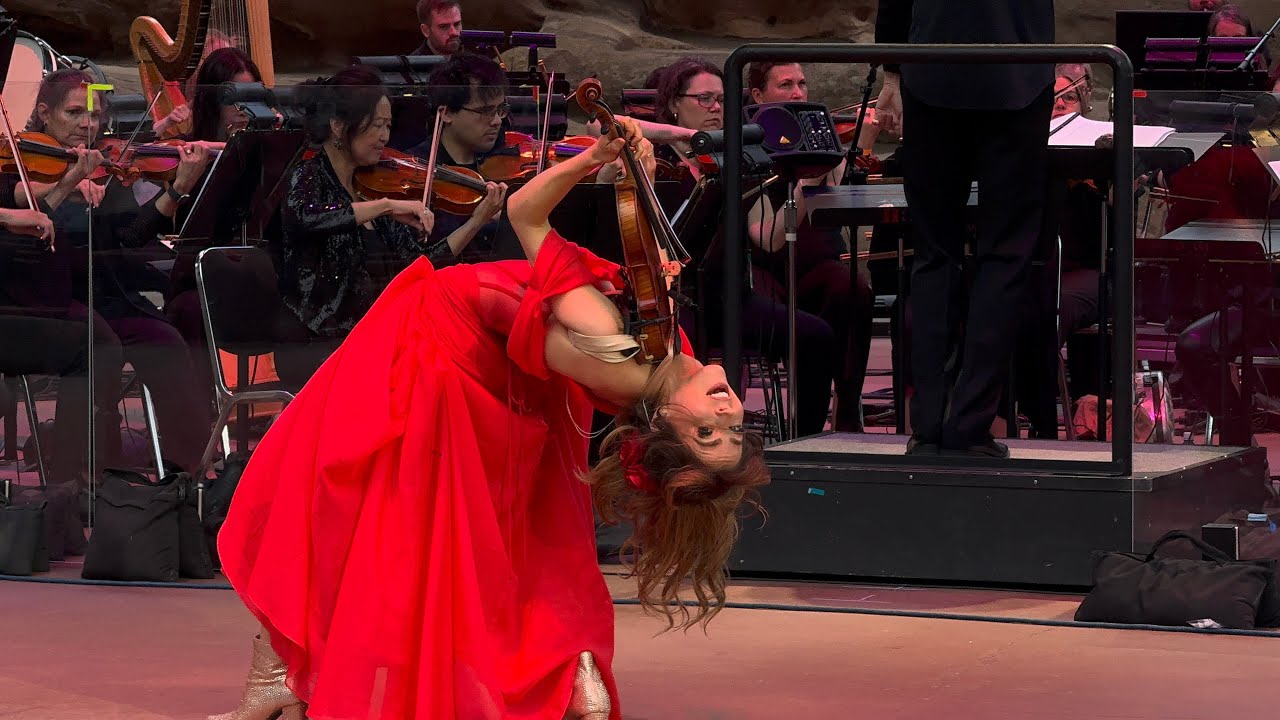
For one evening, Lindsey Stirling did not have to choose between the energy of a modern concert and the grandeur of a classical performance.
She brought both.
On June 16, 2025, Stirling appeared with the Colorado Symphony at Red Rocks Amphitheatre for A Night with the Symphony. The special performance began at 7 p.m. inside one of America’s most visually dramatic outdoor venues.
The full-set recording, captured in 4K at 60 frames per second, preserves more than a concert. It captures the collision of two musical worlds that were once treated as though they could never fully belong together.
A Violinist Who Refuses to Stand Still
A symphony concert traditionally asks audiences to focus on sound.
A Lindsey Stirling performance demands that they watch as closely as they listen.
Her violin becomes part instrument, part dance partner and part storyteller. Every turn, step and sudden movement appears connected to the rhythm. Yet the physical spectacle never removes the central difficulty of what she is doing.
She still has to play.
That detail is easy to overlook when the staging becomes dramatic. Stirling must maintain intonation, timing and control while moving across the stage—then remain precisely connected to dozens of orchestral musicians performing behind her.
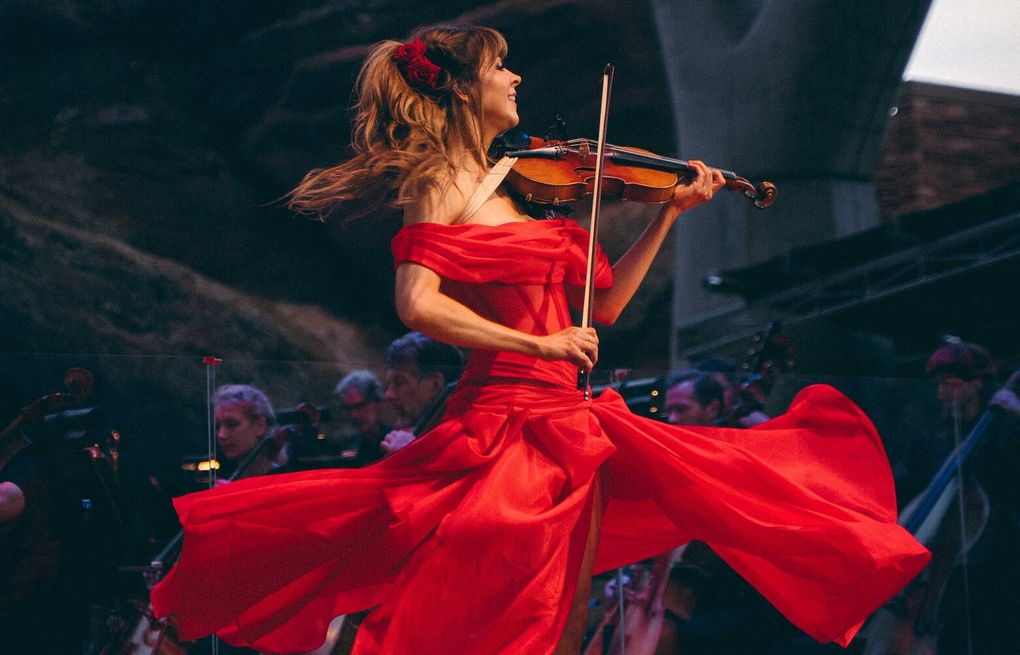
At Red Rocks, that challenge became even greater.
The Colorado Symphony did not merely add volume. Its strings, brass, woodwinds and percussion expanded the emotional architecture of Stirling’s music. Passages that might normally feel intimate suddenly gained enormous scale, while familiar electronic textures were surrounded by the weight and color of a live orchestra.
Coverage of the concert described the collaboration as a blend of Stirling’s violin and dance with the orchestra’s fuller symphonic sound.
But the most compelling part was not simply hearing more instruments.
It was watching one performer attempt to remain emotionally visible inside such a vast sound.
Red Rocks Was More Than a Backdrop
Many concert venues disappear once the performance begins.
Red Rocks does not.
Its towering natural formations make every artist appear simultaneously larger than life and remarkably small. For Stirling, that contrast suited the music perfectly.
She could race across the stage with the confidence of a pop headliner, yet the surrounding landscape and massed orchestra continually reminded the audience of something bigger unfolding around her.
The venue transformed the performance into a visual conversation:
One violin against an orchestra.
One moving figure against monumental stone.
One melody rising into an open Colorado night.
The result was not classical music attempting to become fashionable, nor pop music borrowing an orchestra for decoration. At its strongest, the performance allowed both forms to retain their identities.
The orchestra supplied depth and gravity.
Stirling supplied movement, theatricality and immediacy.
Neither side needed to diminish the other.
The Quiet Detail Hidden Behind the Spectacle
The lights, choreography and symphonic arrangements were designed to command attention.
Yet one of the night’s most meaningful details was not onstage.
According to the official Red Rocks event announcement, one dollar from every ticket was directed to Lindsey Stirling’s Upside Fund, an initiative intended to help relieve medical debt for people in need.
It was a small figure attached to each individual ticket, but across an audience, those individual contributions became something larger.
That detail subtly reframes the entire evening.
The audience was not only gathering to witness an ambitious musical collaboration. Their presence was also connected to assistance for people they would probably never meet.
The loudest elements of the concert were obvious.
Its quietest purpose was easier to miss.
Why the Full-Set Recording Matters
A short concert clip can preserve a climax.
A complete recording preserves the journey toward it.
The full-set format allows viewers to see how the relationship between Stirling and the Colorado Symphony develops across the performance. The orchestra is not simply revealed as a surprise and then forgotten. Its presence changes the atmosphere, pacing and emotional scale of the entire show.
The high-resolution recording also emphasizes details that a distant audience member might have missed: the physical effort behind Stirling’s playing, the coordination between musicians and the moments when the spectacle gives way to concentration.
That may be the real reason fans continue returning to performances like this.
The dancing initially captures the eye.
The musicianship keeps the viewer watching.
The Question Hidden Inside the Final Notes
Lindsey Stirling has built her career by rejecting the idea that violin music must remain physically restrained or stylistically predictable. Her performances combine classical technique with electronic production, choreography and theatrical storytelling.
Yet standing before the Colorado Symphony at Red Rocks, she appeared to face a different artistic question.
Could her intensely individual style survive the power of a full orchestra?
The answer was not found in a single dramatic gesture or a single soaring note.
It was found in the balance.
There were moments when Stirling seemed to lead the enormous sound behind her. At other times, the orchestra appeared to lift her violin and carry it beyond the stage.
Perhaps that is the detail viewers cannot stop revisiting:
Was Lindsey Stirling commanding the symphony—or was the symphony revealing a side of her music that had been there all along?
By the end of the night, the distinction no longer seemed important.
One violin, one orchestra and one extraordinary venue had become part of the same story.